

ASTM Testing Standards for Basalt and Granite: What C97, C170, and C615 Mean
TL;DR: ASTM standards keep unsuitable stone out of applications it can’t handle. Think of a soft, absorbent stone used in a freeze-thaw climate, or a weak one under structural load. For basalt and granite, four standards matter most: C97 (absorption and density), C170 (compressive strength), C880 (flexural strength), and C241 (abrasion resistance). Granite also has its own dedicated specification, C615, bundling these tests into one benchmark. Basalt has no equivalent standard; specifiers evaluate it against the individual test methods instead. This guide explains what each standard measures and why it matters for a real project. Download our stone catalogues for mill-certified test data, or contact our team with project-specific questions.
Why These Standards Exist
ASTM stone standards aren’t bureaucratic overhead. They exist to keep unsuitable materials out of applications they can’t handle. A structural lintel needs enough flexural strength to avoid failing under load – fail that test, and you risk real damage and injury. A high-traffic commercial lobby needs strong abrasion resistance, or the floor shows visible wear within months instead of decades. These standards give architects, specifiers, and suppliers a shared, documented language. Everyone can describe how a stone will actually perform, rather than relying on a supplier’s word alone.
ASTM C97: Absorption and Bulk Specific Gravity
How much water a stone absorbs, and how dense that stone is, are what C97 measures. For exterior applications in cold climates, both figures carry enormous weight: more likely to crack or spall when the absorbed water freezes and expands inside it is a stone that takes on more moisture. Behind every “low water absorption” claim made about basalt or granite sits this test result, and among the first numbers worth requesting for any project exposed to freeze-thaw cycles is this one.
ASTM C170: Compressive Strength
How much load a stone can bear before it crushes is what C170 measures. For structural applications and heavy-traffic paving, this is the number that carries the most weight, since how much weight (foot traffic, vehicle loads, or the weight of a structure above) the stone can support without failing is what it determines. Well above the minimums required for paving and cladding is where both basalt and granite typically test, though meaningfully by quarry block the exact figure still varies, which is why an actual test result on the specific stone being ordered is not something a general “granite is strong” claim can substitute for.
ASTM C880: Flexural Strength
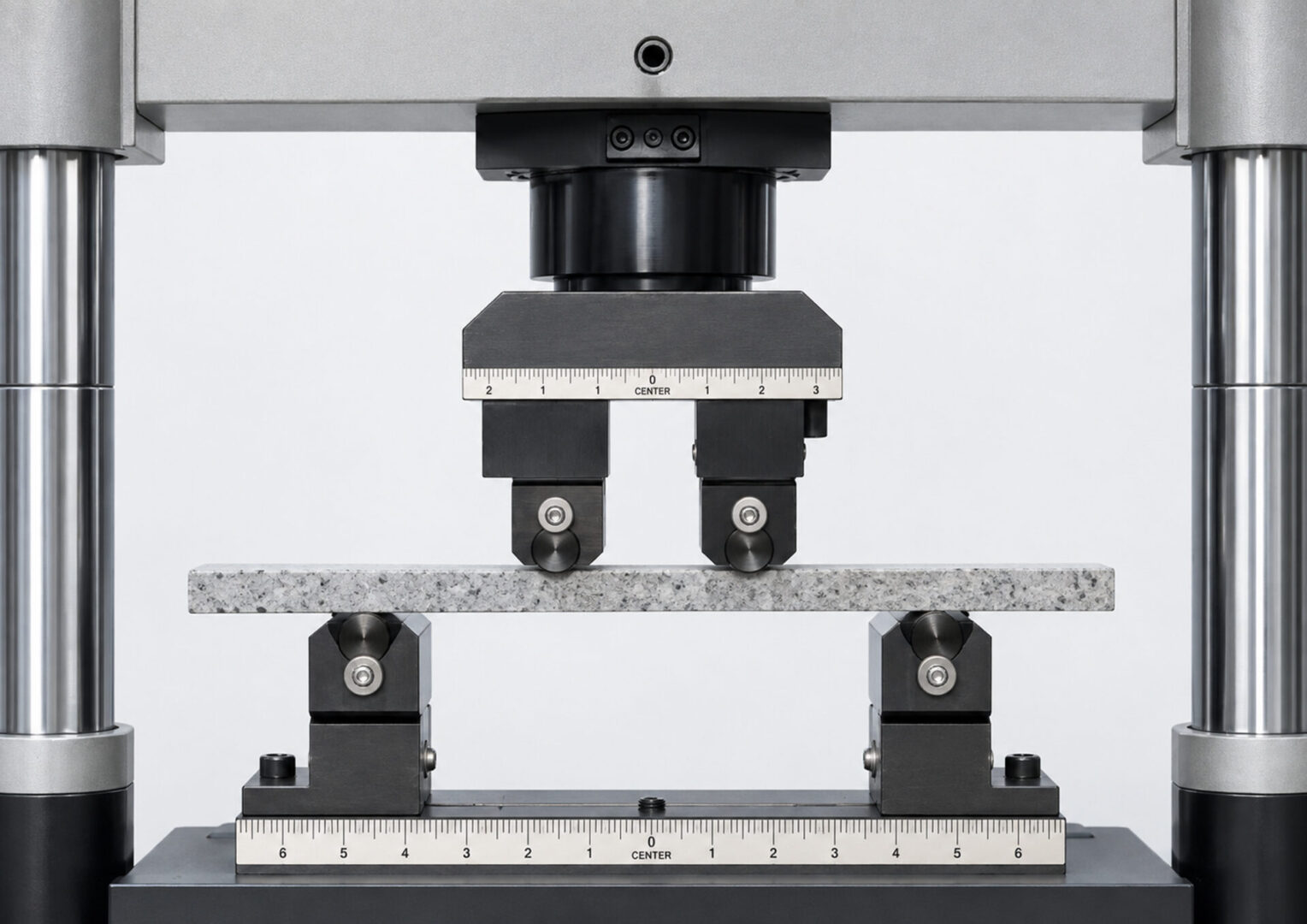
Using third-point loading on a sample matching the actual thickness the stone will be installed at, C880 measures a stone’s bending strength across a span. Rather than testing breakage at a single narrow point, how much an entire span will flex before it breaks is what this test determines, a quality that makes it especially relevant for paving and cladding, where over a gap or a joint a slab spans rather than resting on solid support everywhere. Around 1,200 psi is the generally recommended minimum flexural strength for stone used this way. Arguably the single most practical test result for anyone specifying paving or cladding is this one, since how the stone will actually be loaded once installed is what it reflects, not merely how strong the raw material is in isolation.
ASTM C241: Abrasion Resistance (Foot Traffic)
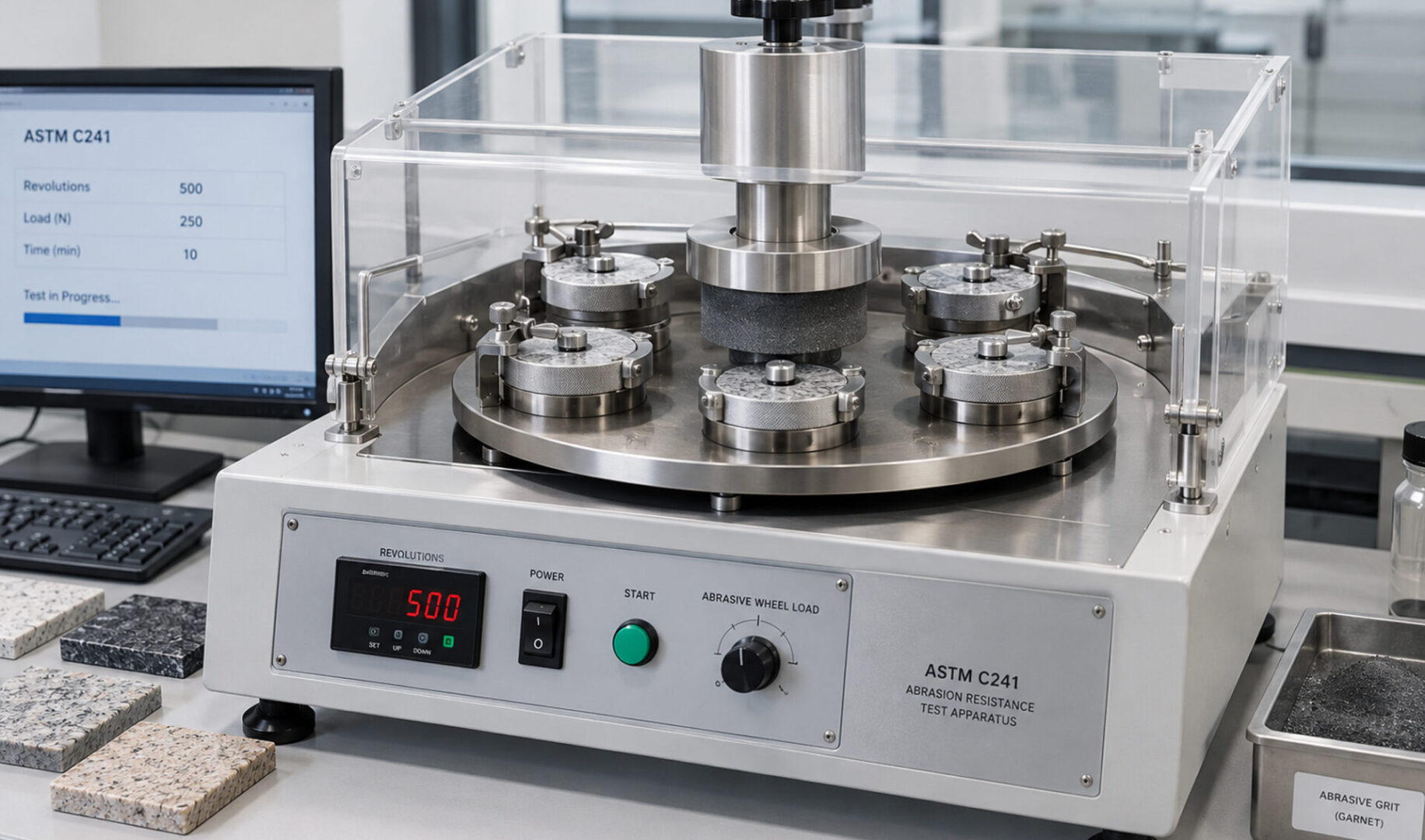
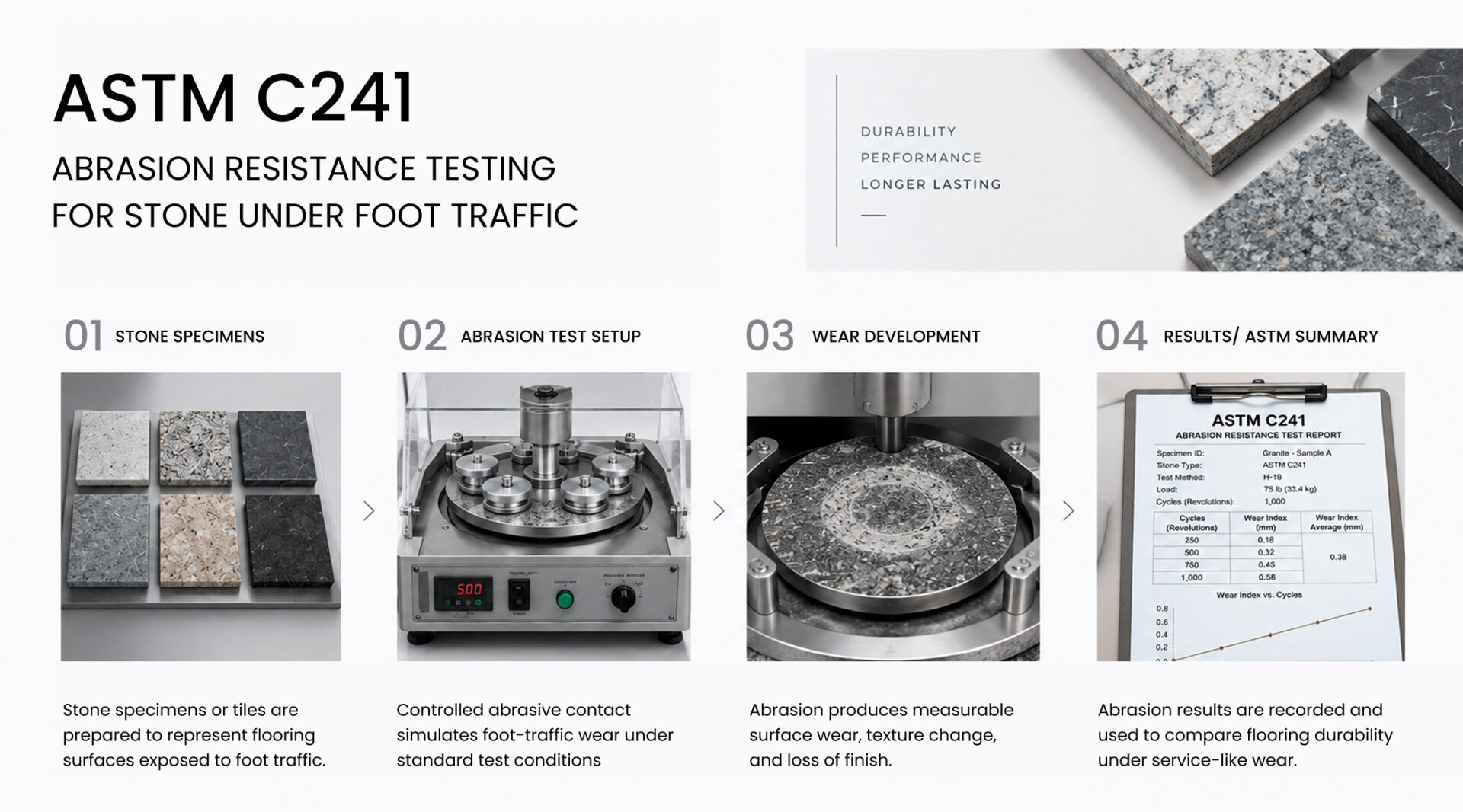
Using a specified abrasive wheel to simulate years of pedestrian movement in a controlled lab setting, C241 measures how well a stone resists wear from foot traffic. Expressed as a hardness number is the result, and most directly tied to how a floor or paved surface will look after years of real use (whether crisp and defined it stays, or worn and dull it starts to look) is this test result. To softer stones like marble and limestone as well as granite does this test apply, and particularly relevant for any commercial lobby, plaza, or walkway expected to handle heavy pedestrian volume for decades is it.
ASTM C615: The Granite-Specific Specification
Genuinely diverge on documentation is where granite and basalt do so. Written specifically for granite dimension stone, and covering exterior and interior cladding, curbstone, paving, landscape features, structural components, and monuments, is ASTM C615, a dedicated material specification. Not merely how to test granite does it describe — documented physical requirements the material has to meet across absorption, density, compressive strength, modulus of rupture, abrasion resistance, and flexural strength, all in one referenceable standard, are what it sets.
No equivalent basalt-specific ASTM material specification exists for basalt. Using the same individual test methods described above (C97, C170, C880, and C241) without a single standard that bundles the results into one basalt-specific pass/fail benchmark the way C615 does for granite, is basalt instead evaluated. A mark against basalt’s actual performance this is not; very well against each of these individual methods does basalt test. A bit more assembly on the specifier’s end it does mean a basalt specification takes, since citing the individual test methods and requesting results against each one, rather than pointing to a single umbrella standard, is required.
How to Read a Mill Certification
A mill certification is the document a quarry or fabricator provides. It shows a specific stone block’s actual test results against these standards — not published industry-average ranges. When reviewing one, look for three things. First, the specific test method cited — C97, C170, C880, C241, and C615 where applicable. Second, the numeric result alongside the minimum threshold for the intended application. Third, the date and quarry block it applies to. Natural stone properties vary between blocks from the same quarry. Don’t assume a certification for one block applies to another without verification.
Typical Test Results for Basalt and Granite
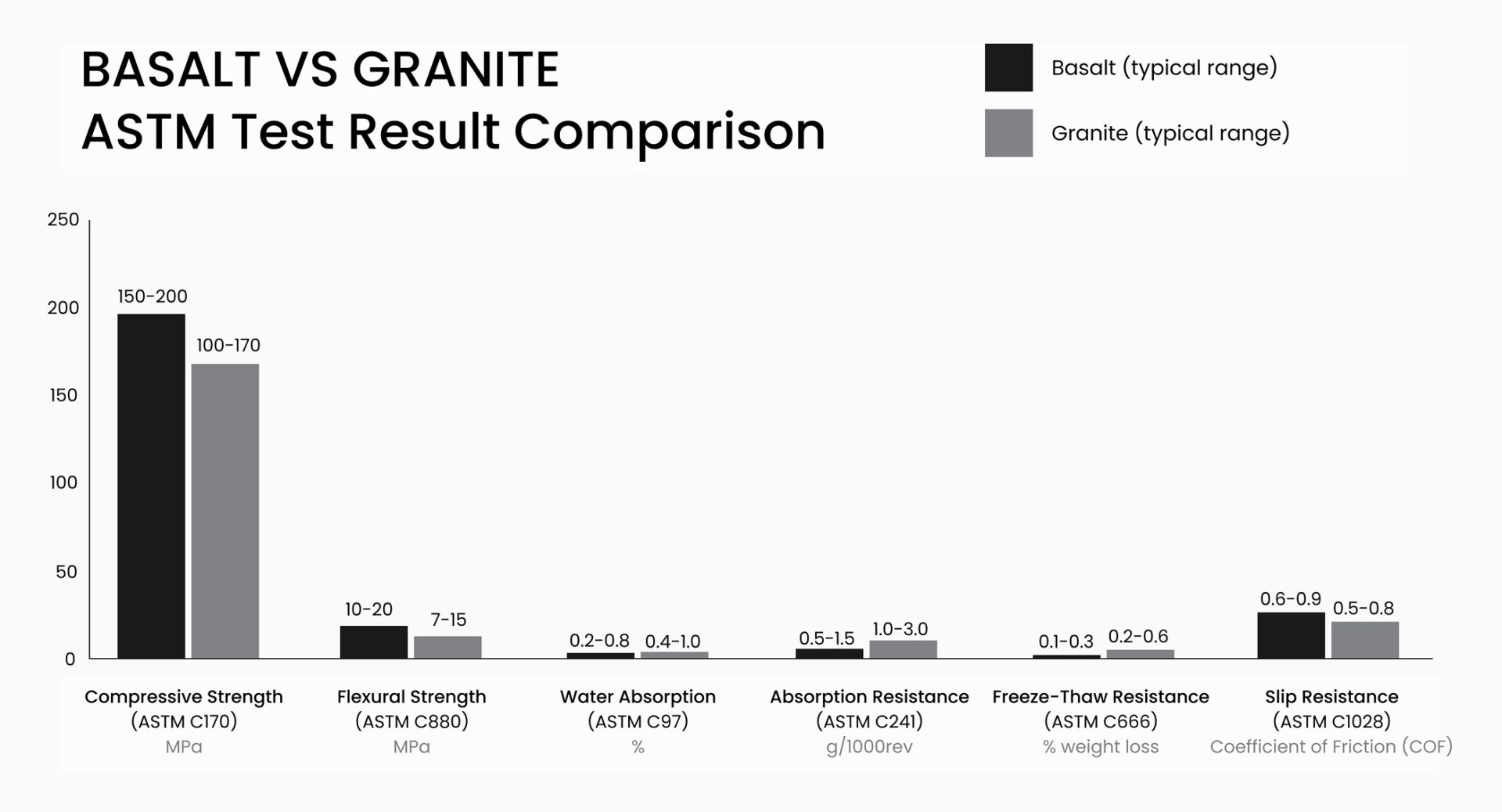
To make these standards concrete, here’s how basalt and granite typically perform against each one, based on industry-standard dimension-stone testing ranges. Always let actual mill certifications take precedence over these general figures for a specific project.
| Test Method | What It Measures | Basalt (Typical) | Granite (Typical) |
| ASTM C97 | Water absorption | Often under 0.5–1% | Typically under 0.4–0.5% |
| ASTM C170 | Compressive strength | ~100–300 MPa | ~130–240 MPa |
| ASTM C880 | Flexural strength | Commonly above the 1,200 psi minimum | Often 1,200–2,000+ psi |
| ASTM C241 | Abrasion resistance | Performs well; less centrally codified than granite | Governed under ASTM C615 requirements |
<hr />
The real takeaway is the overlap on display here: similarly well against the same individual test methods do basalt and granite
perform. Procedural, not performance-based, is the difference — into one referenceable specification get granite’s results bundled, while method by method basalt’s need to be requested and cited.
FAQ
What does ASTM C97 measure?</strong>
Absorption and bulk specific gravity — essentially how much water a stone absorbs and how dense it is, both of which affect freeze-thaw performance.
Why does granite have its own ASTM specification but basalt does not?
Engineers developed ASTM C615 specifically for granite dimension stone. No equivalent basalt-specific material specification exists. Specifiers evaluate basalt using the general test methods instead (C97, C170, C880, C241).
What is the most important test for paving applications?</strong>
Most specifiers consider C880 (flexural strength) the most practically relevant test. It measures how a slab performs under real installed conditions – spanning a gap or joint, rather than just raw material strength in isolation.
Does ASTM C241 apply to granite as well as softer stones?
Yes. Testers use C241 across stone types, including granite, marble, limestone, and sandstone, to measure resistance to foot-traffic wear over time.
What should I ask a supplier for when specifying basalt or granite?</strong>
Ask for a current mill certification citing the specific test methods (C97, C170, C880, C241, and C615 for granite). Make sure the results tie to the actual quarry block supplying your project.
CONTACT OUR TEAM FOR PRODUCT INFORMATION, SAMPLES OR PRICING
