

What Custom Stone Fabrication Includes
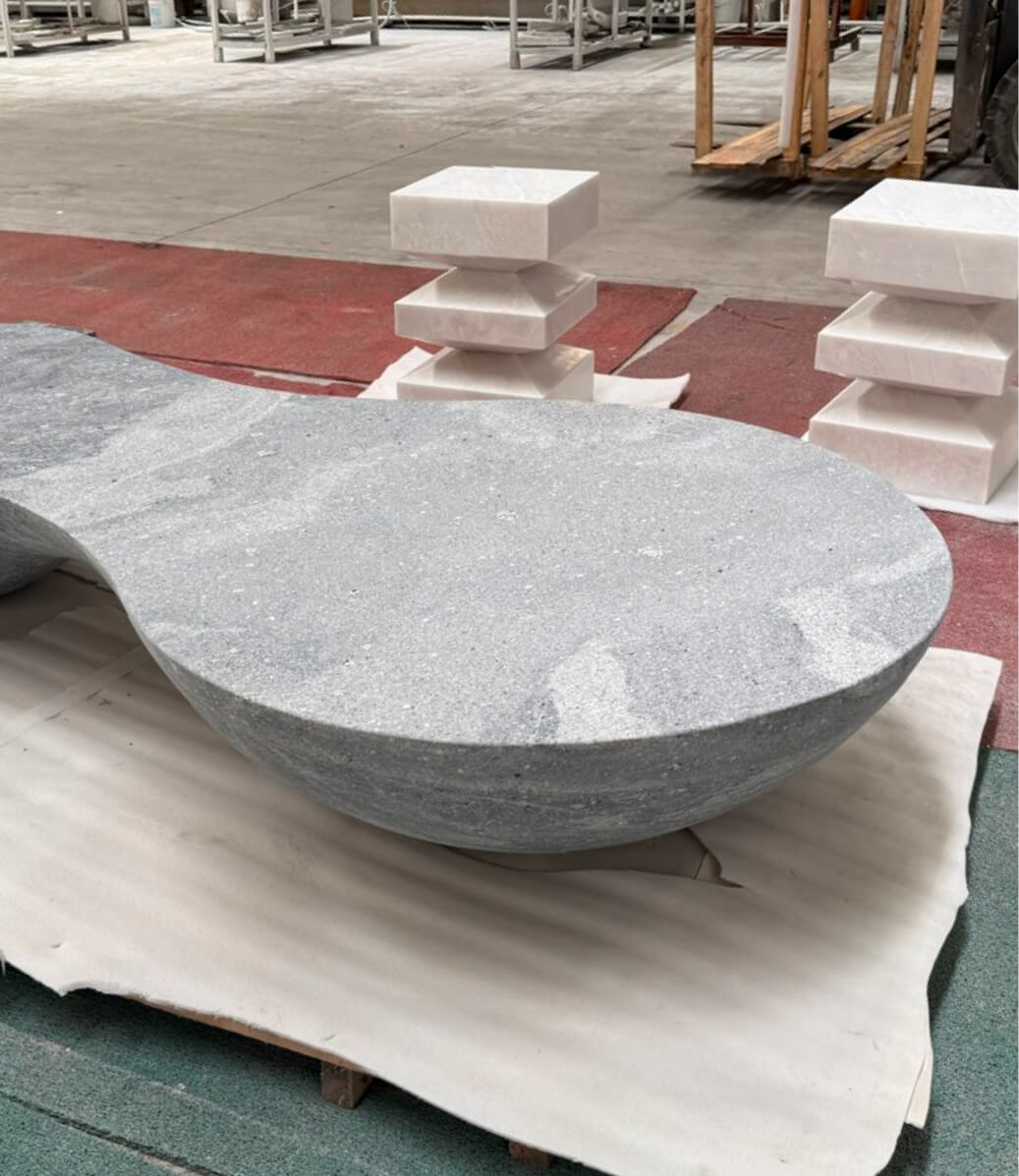
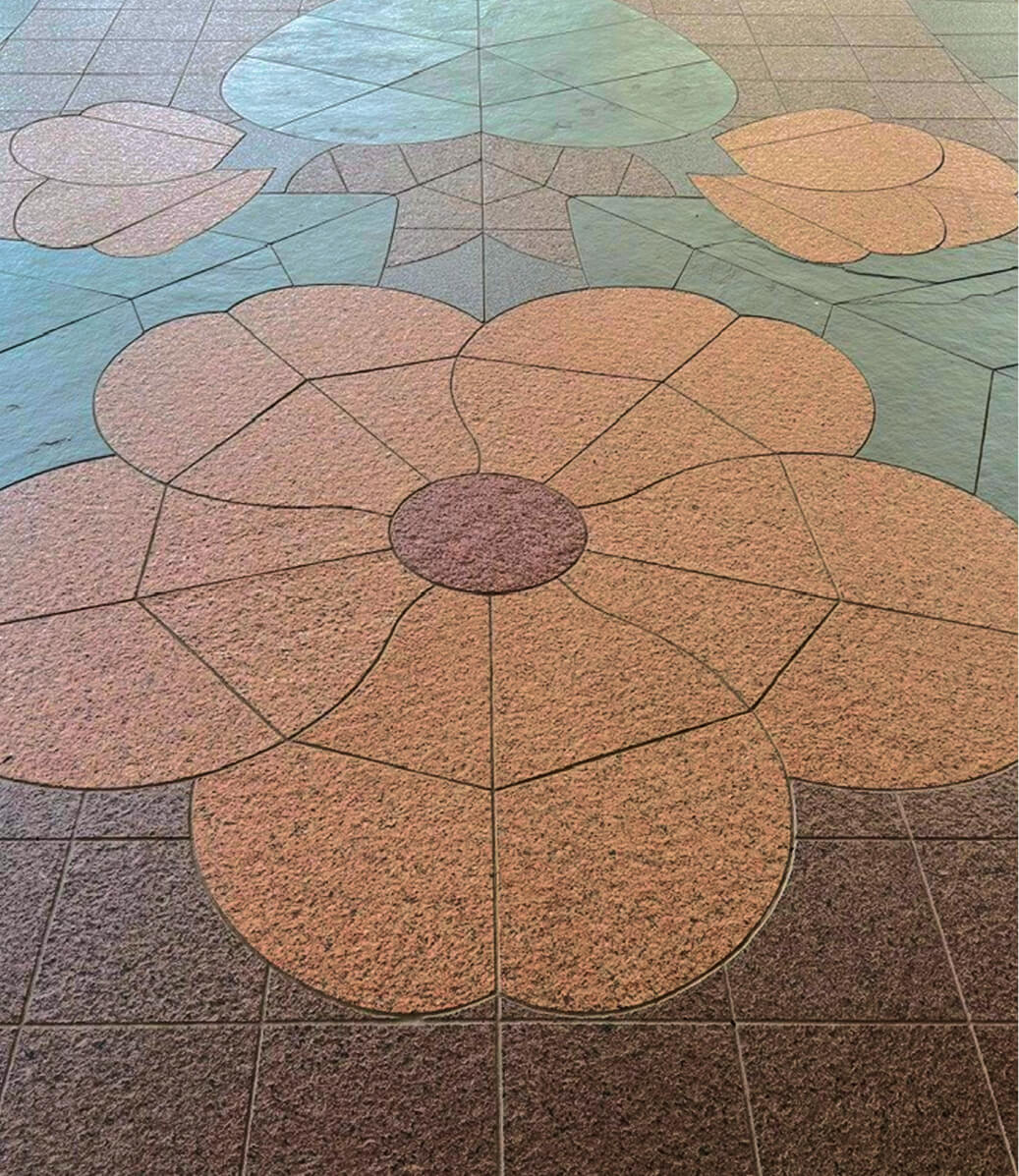
This service covers stone production outside standard catalog dimensions and finishes: custom-cut pieces to precise architectural specifications, unique edge profiles and detailing not available in standard product lines, non-standard finishes or finish combinations tailored to a specific design vision, and complex geometries or patterns that require specialized cutting and fabrication capability.
Custom fabrication typically follows detailed shop drawings or CAD specifications that define exactly what needs to be produced, ensuring the fabrication partner has the precise information needed to execute a genuinely bespoke design accurately.
 |
 |
Why Custom Stone Fabrication Matters
Architectural vision often exceeds what a standard product catalog can deliver such as a signature building facade, a unique monument design, or a distinctive interior feature. Without access to genuine custom fabrication capability, architects and developers are forced to either compromise their design to fit available standard products, or manage the fabrication process themselves without an established production relationship.
Custom fabrication removes that constraint, giving architects and developers the ability to specify exactly what a project needs and have it produced accurately, rather than adapting the design around what’s already on the shelf.
How Our Custom Fabrication Process Works
- Design and specification intake. We start from finalized architectural drawings, CAD designs, or detailed shop drawings defining the custom requirements.
- Fabrication partner matching. We identify which partner within our network has the specific capability needed for the project’s dimensions, profiles, or finishes.
- Sample and prototype review. For complex or high-stakes projects, sample pieces are produced and reviewed before full production begins.
- Production and quality control. Fabrication proceeds against the agreed specifications, with quality control verifying dimensional and finish accuracy throughout.
- Delivery coordination. Finished custom pieces are packaged and coordinated for delivery, often sequenced to match on-site installation needs.
Who This Service Is For
Custom Stone Fabrication is built for architects and developers with a signature design element that standard products can’t fulfill, contractors executing a unique architectural commission, and any project where a genuinely bespoke stone element is the actual design requirement.
Signs You Need This Service
Custom fabrication is the right conversation to have when:
- A design element doesn’t exist in any standard catalog. The architectural concept calls for a shape, profile, or dimension that isn’t available as a stock product from any supplier.
- A signature design feature is central to the project. A specific stone element is meant to stand out as a defining architectural feature, not just functional material.
- Standard products would require compromising the design. Sticking to available catalog items would mean altering the design intent in ways the architect or client isn’t willing to accept.
- Detailed technical drawings already exist. You have finalized shop drawings or CAD specifications ready to hand off to a fabrication partner capable of executing them precisely.
- The project has the budget and timeline for bespoke production. You understand that custom fabrication generally costs more and takes longer than standard products, and the project has room for both.
When a design genuinely can’t be achieved with standard products, custom fabrication is what makes it possible rather than compromised.
How This Differs from OEM Manufacturing
Custom Stone Fabrication is about producing a physically unique piece for a specific project, regardless of branding. OEM Manufacturing is about producing standard or semi-custom products under a client’s own brand for ongoing resale. A signature lobby feature wall calls for custom fabrication; a branded retail tile line calls for OEM manufacturing. Some projects genuinely need both, for different parts of the same business.
Get Started
If your project includes a design element that doesn’t fit standard product dimensions or finishes, contact our team with your design specifications. We’ll help identify the right fabrication partner and process for what you’re trying to build.
What Makes a Fabrication Project Genuinely Custom
Not all variations from a standard catalog item require the full custom fabrication process – sometimes a change in thickness or a less common finish is enough of a variation that an existing production partner can work with it without too much added complexity. Genuinely custom fabrication becomes necessary when a design calls for something that requires specialized cutting capability, a non-standard profile that needs dedicated tooling, or a level of geometric complexity that a standard production line isn’t set up to produce accurately at scale.
Matching a project to the right fabrication partner depends on understanding that distinction clearly upfront, since not every production facility that handles standard products well is equipped for genuinely bespoke work. Part of the value in coordinating custom fabrication through an established network is knowing which partners can actually deliver on complex, one-off specifications without treating them as a disruptive exception to their normal production line.
FAQ
Is custom fabrication significantly more expensive than standard products?
Generally yes, since custom work requires dedicated tooling, more hands-on production attention, and often lower production volume per piece than standard catalog items. The specific premium depends on the complexity of the design.
How long does custom fabrication typically take compared to standard orders?
Custom fabrication generally takes longer than standard product lead times, since it often involves sample review, prototype approval, and more deliberate production pacing to ensure accuracy on complex pieces.
Do you require finalized shop drawings before starting custom fabrication?
In most cases, yes. Precise, agreed-upon specifications are essential for custom work specifically, since there’s no standard product reference to fall back on if details are ambiguous once production begins.
CONTACT OUR TEAM FOR PRODUCT INFORMATION, SAMPLES OR PRICING
