


What Container Consolidation Includes
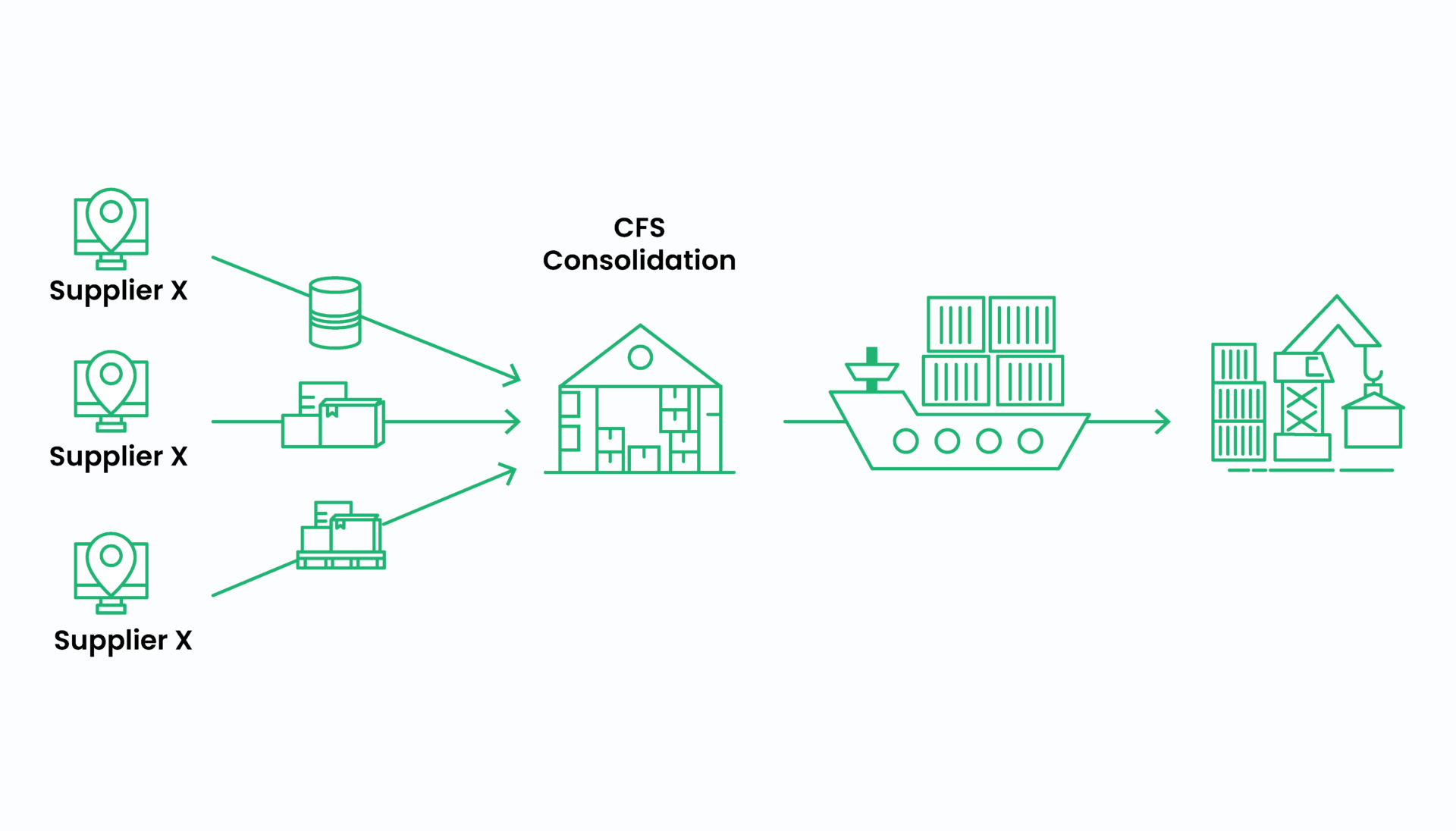
Consolidation involves coordinating the timing and delivery of products from multiple quarry or factory partners to a single loading point, packing them together into one container in a way that protects each product type appropriately, and preparing unified export documentation covering the combined shipment rather than separate paperwork for each supplier.
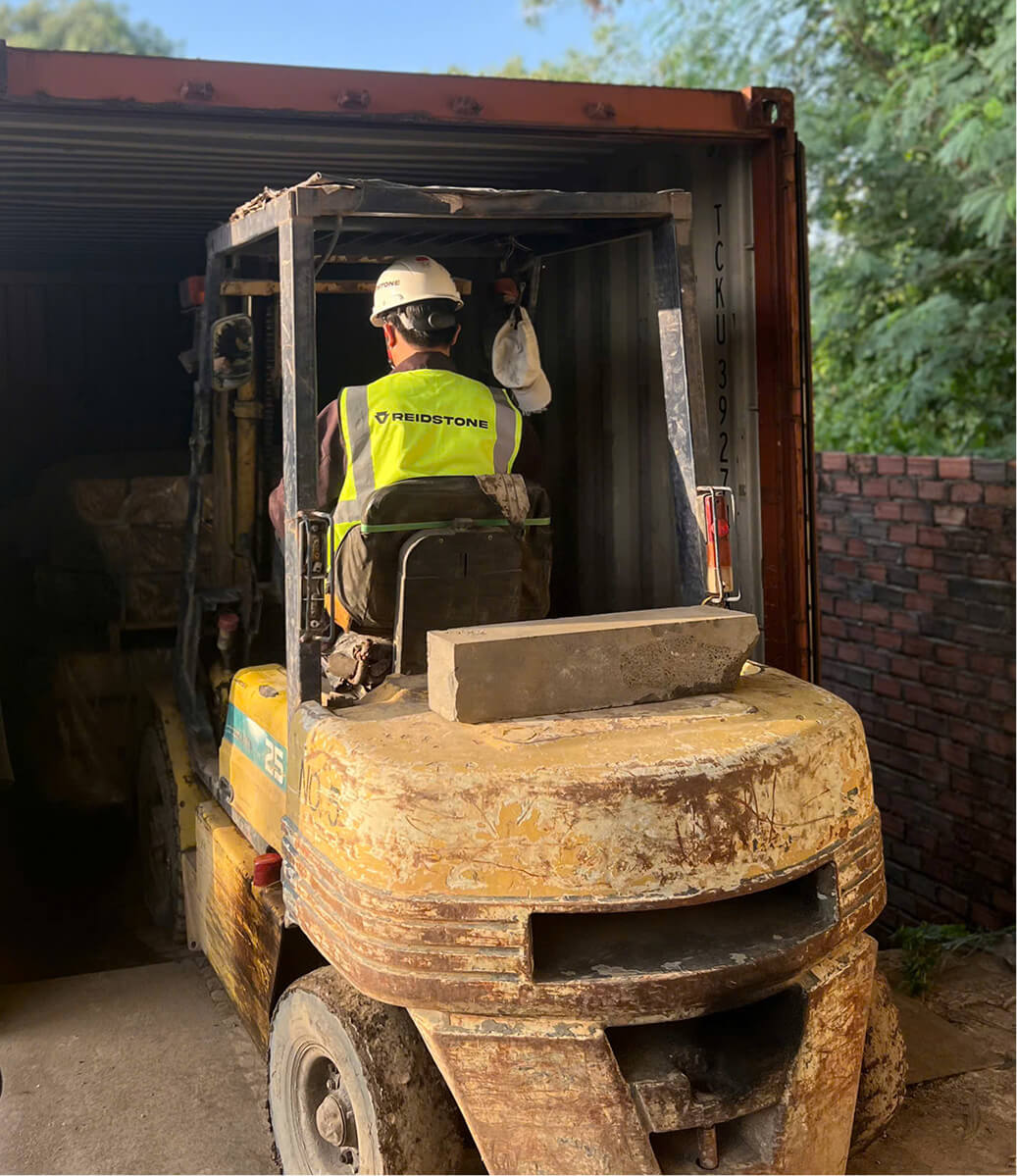
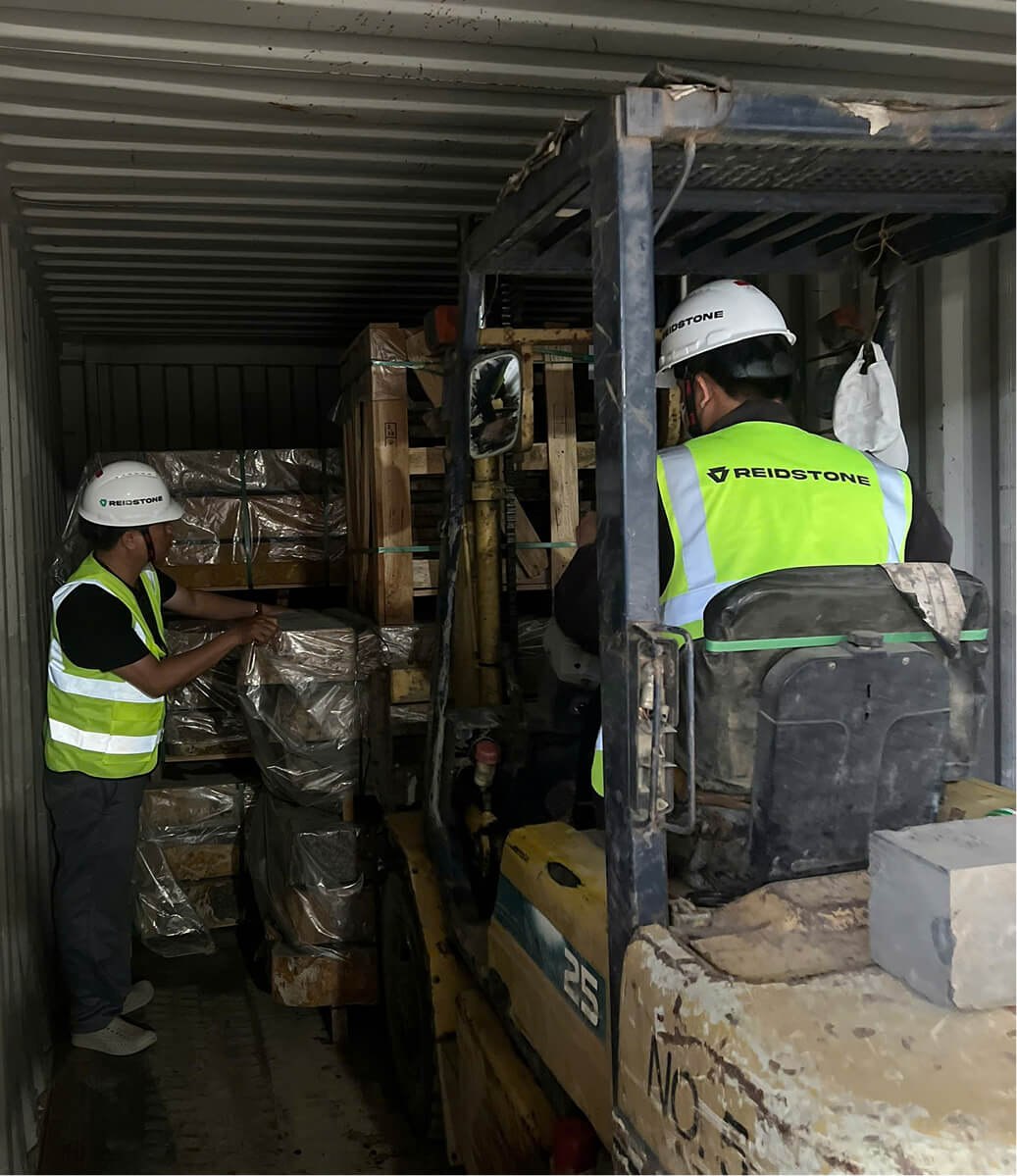
This requires careful sequencing because different stone types and product categories often need different packaging approaches, and combining them into one container means planning the load order so heavier or bulkier items don’t damage more delicate pieces during transit.
Why Container Consolidation Matters
Shipping several partial containers from different suppliers is expensive and inefficient: freight costs scale with the number of shipments regardless of how full each container actually is, and managing separate documentation, customs clearance, and delivery schedules for each one multiplies the administrative burden on the buyer.
For clients sourcing a mix of products – say, granite pavers from one factory and basalt tile from another, now consolidation turns what would otherwise be two separate, partially-full shipments into a single, cost-efficient one, without sacrificing the safe handling each product type needs.
How Our Consolidation Process Works
- Order coordination. We align delivery timing across multiple suppliers so products arrive at the consolidation point together.
- Packing plan development. We plan how different product types will be packed and sequenced within the container to prevent damage.
- Consolidated loading. Products are loaded according to the packing plan, balancing space efficiency with protective handling.
- Unified documentation. A single set of export documentation is prepared covering the full consolidated shipment.
- Delivery and customs coordination. The consolidated container proceeds through export and delivery as a single shipment, simplifying customs clearance on the client’s end.
Who This Service Is For
Container Consolidation is most useful for importers and distributors sourcing multiple product types or materials for the same delivery, smaller distributors whose individual orders don’t fill a full container on their own, and any client looking to reduce per-unit shipping costs across a multi-supplier order.
Signs You Need This Service
Consolidation is usually worth considering when:
- You’re sourcing multiple products for one project. Your order includes several distinct materials or product categories, each of which individually wouldn’t fill a container.
- Shipping costs feel disproportionately high. You’ve noticed that shipping several smaller, partial-container orders costs significantly more per unit than a single fuller shipment would.
- You’re managing multiple sets of paperwork. You’re currently handling separate documentation and customs processes for what could reasonably be a single combined shipment.
- Timelines across suppliers are reasonably flexible. Your delivery deadline has enough flexibility to allow production across multiple suppliers to align before loading.
- You want fewer shipments to track. Simplifying logistics down to a single coordinated shipment, rather than several independent ones, would reduce administrative overhead on your end.
If shipping costs and paperwork complexity have felt disproportionate to order size, consolidation is worth a direct conversation.
 |
 |
How This Differs from Natural Stone Export
Natural Stone Export covers the complete export process for any shipment, single-supplier or consolidated. Container Consolidation is a specific technique applied within that broader export process, relevant only when a client is combining products from multiple sources into one shipment. Most single-supplier orders don’t need consolidation. It’s simply a targeted cost-saving option for more complex, multi-source orders specifically.
Get Started
If you’re sourcing from multiple suppliers for the same project and want to reduce shipping costs, contact our team to discuss whether container consolidation makes sense for your order mix and timeline.
When Consolidation Makes the Most Sense
Consolidation delivers the most value when a client is sourcing multiple distinct products that individually wouldn’t fill a container, for instance a smaller order of granite pavers alongside a smaller order of basalt tile, for example, each of which might otherwise ship as a partially empty, disproportionately expensive container on its own. Combined into one shipment, the per-unit shipping cost drops meaningfully, without either product sitting in a warehouse waiting for a larger order to justify its own dedicated container.
The trade-off worth understanding upfront is timing: consolidation requires coordinating production schedules across multiple suppliers so everything arrives at the loading point around the same time, which can mean a faster-moving supplier’s product waits briefly for a slower one. For time-sensitive orders, it’s worth discussing this trade-off directly rather than assuming consolidation is automatically the right choice for every multi-supplier order.
FAQ
How much can consolidation actually save on shipping costs?
Savings depend on order size and how full the consolidated container ends up being, but combining multiple partial shipments into one full container is typically far more cost-efficient than shipping each partially-full container separately.
Does consolidation increase the risk of damage during transit?
Not when packed correctly. Our packing plans account for how different product types interact within a shared container, sequencing and securing items specifically to prevent one product type from damaging another.
Can consolidation combine orders from suppliers outside Reidstone’s own network?
In most cases, consolidation works best when Reidstone is managing the sourcing relationships involved, since that gives us the coordination access needed to align delivery timing and packing across suppliers.
CONTACT OUR TEAM FOR PRODUCT INFORMATION, SAMPLES OR PRICING
