

Basalt and Granite Finishes Explained: Honed, Flamed, Bush-Hammered, and Polished
TL;DR: The finish applied to granite or basalt alters its texture, slip resistance, and price just as significantly as the stone itself does. Polished and honed finishes are smooth and best suited to countertops and indoor flooring; flamed, bush-hammered, and split-face finishes are textured and better suited to driveways, patios, and exterior cladding. Below, this guide sets out how each finish is produced, what it looks and feels like, and which applications it suits best, explore our basalt and granite finish galleries or contact our team once a finish has been narrowed down.
Why Finish Is Important
Depending on how its surface is finished, the same block of granite or basalt can wind up looking, feeling, and functioning entirely differently. Slip resistance (a rough flamed surface behaves very differently underfoot than a glossy polished one), color intensity (polishing brings out the deepest, richest version of a stone’s natural color, while flaming mutes it), and cost (some finishes require far more processing than others) are three aspects of finish that are important for nearly any project. One of the most frequent (and preventable) mistakes consumers make is selecting the incorrect finish for an application.
An Explanation of the Core Finishes
Polished
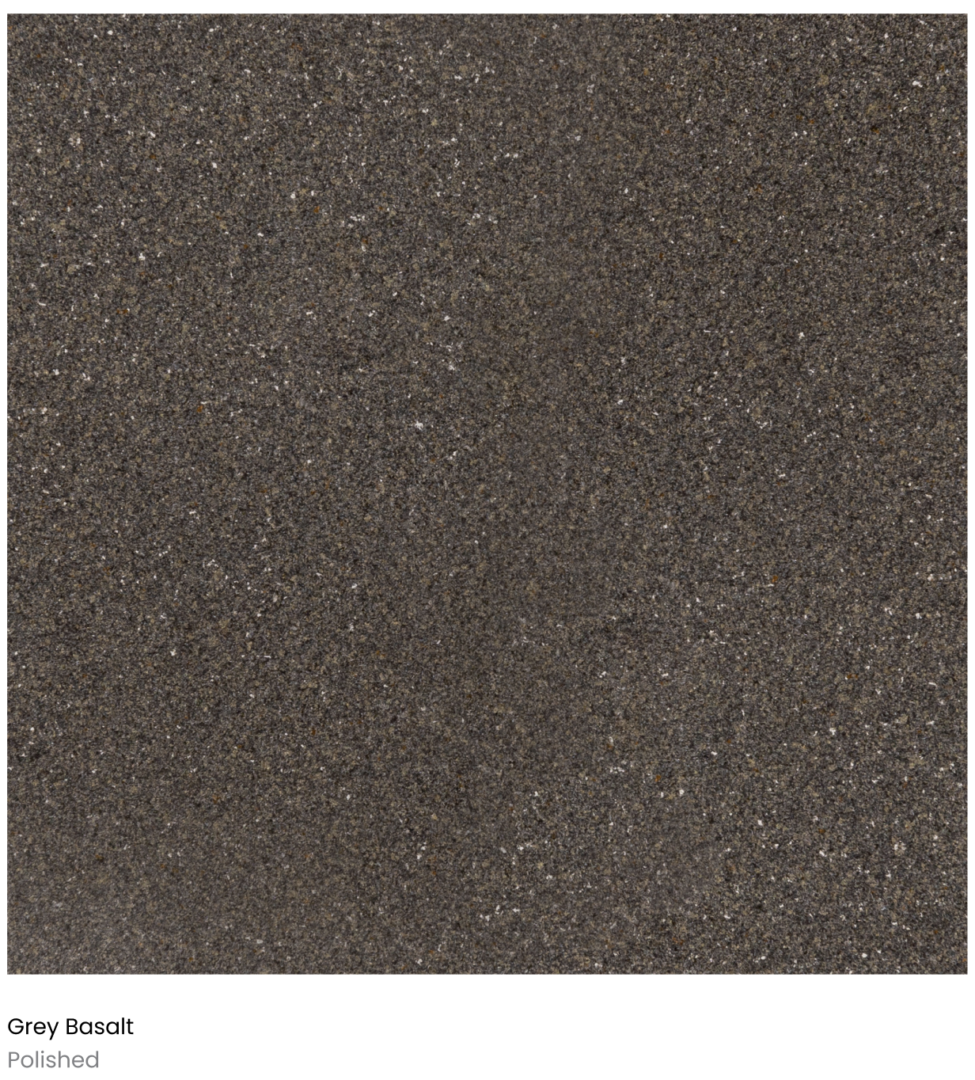
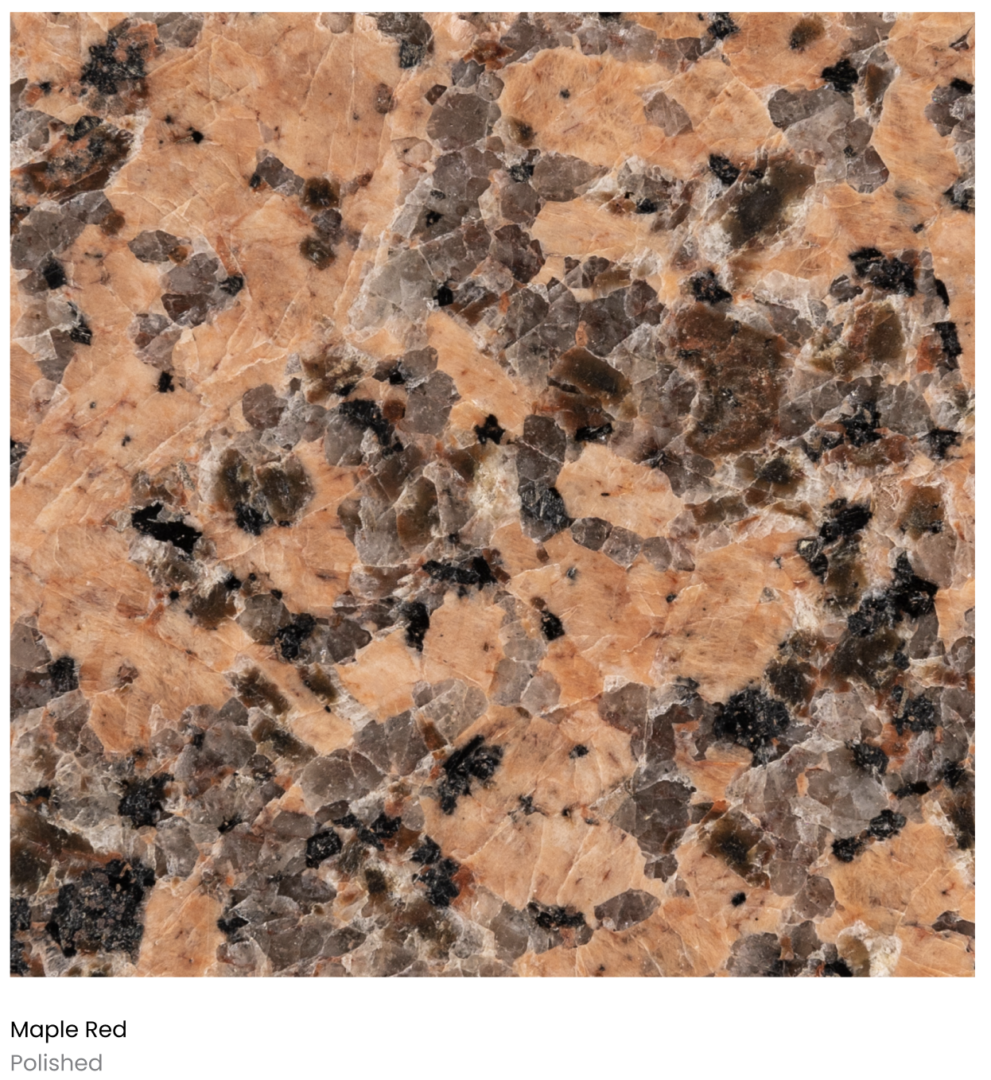
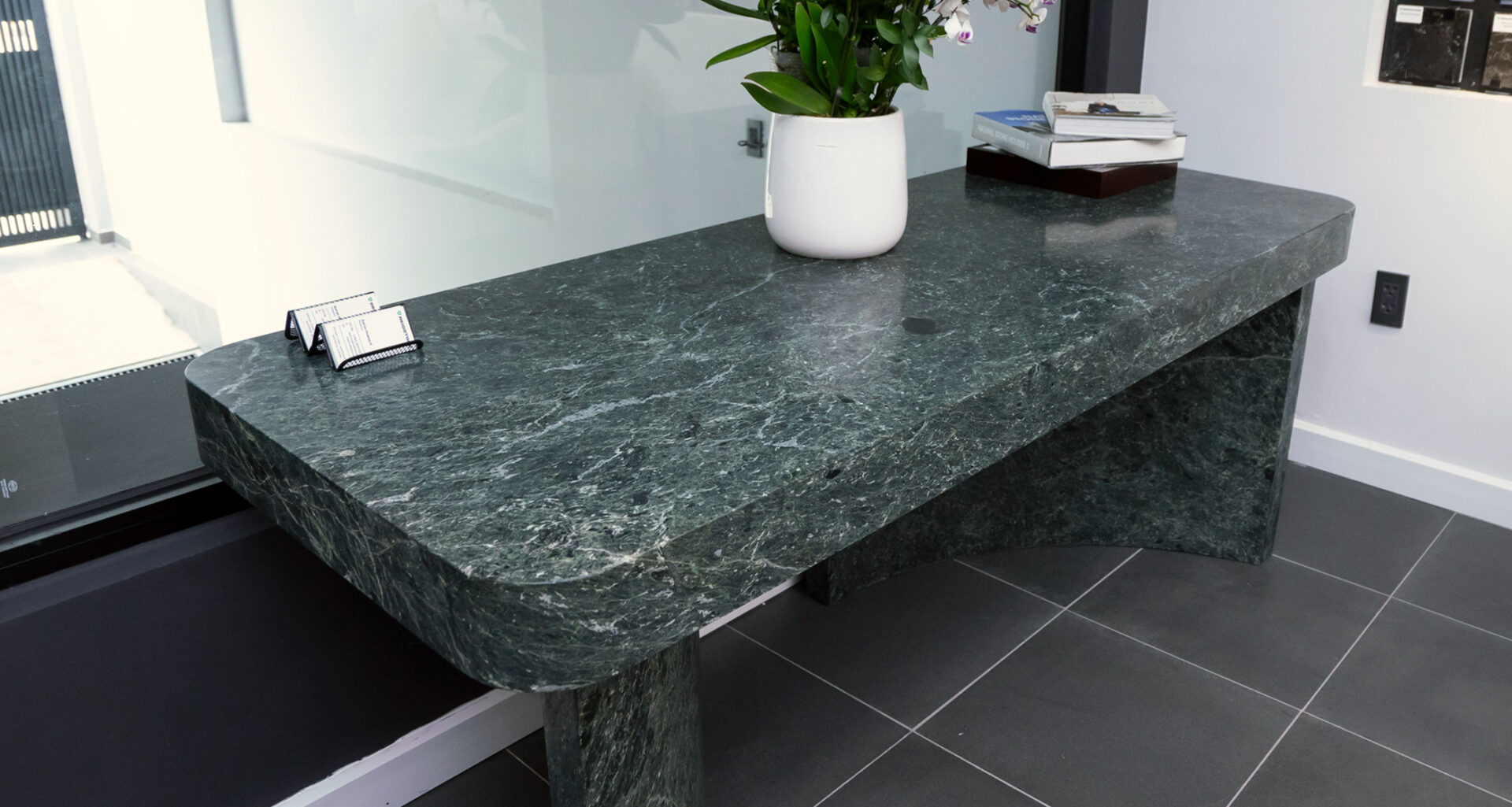
The stone is ground with increasingly finer abrasive pads until the surface is glossy, smooth, and reflective to achieve a polished finish. The stone’s pores are sealed, the deepest color and veining are brought out, and the surface becomes almost impenetrable to moisture and normal chemical damage. Although polished finishes are commonly used for countertops, indoor flooring, and accent walls, they are rarely utilized outside since they become much more slick when wet.
 |
 |
Flamed
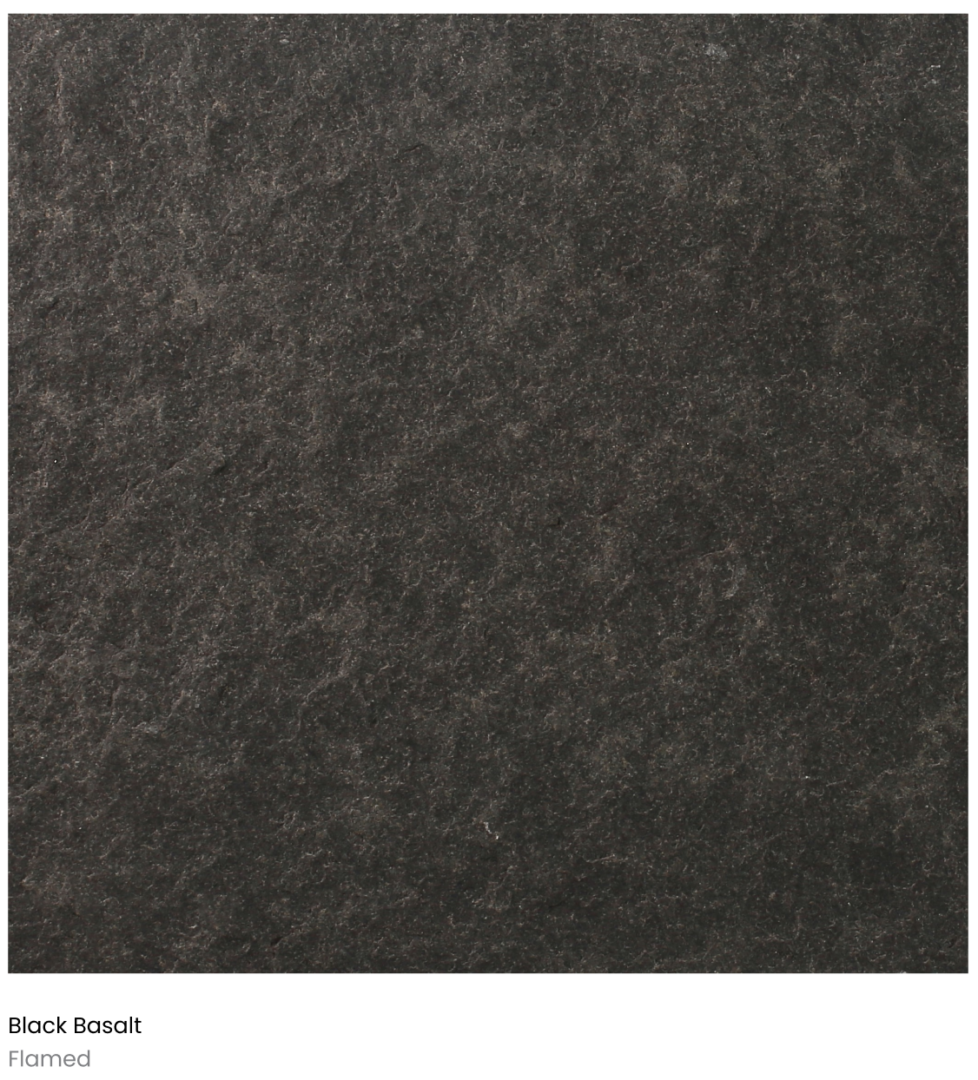
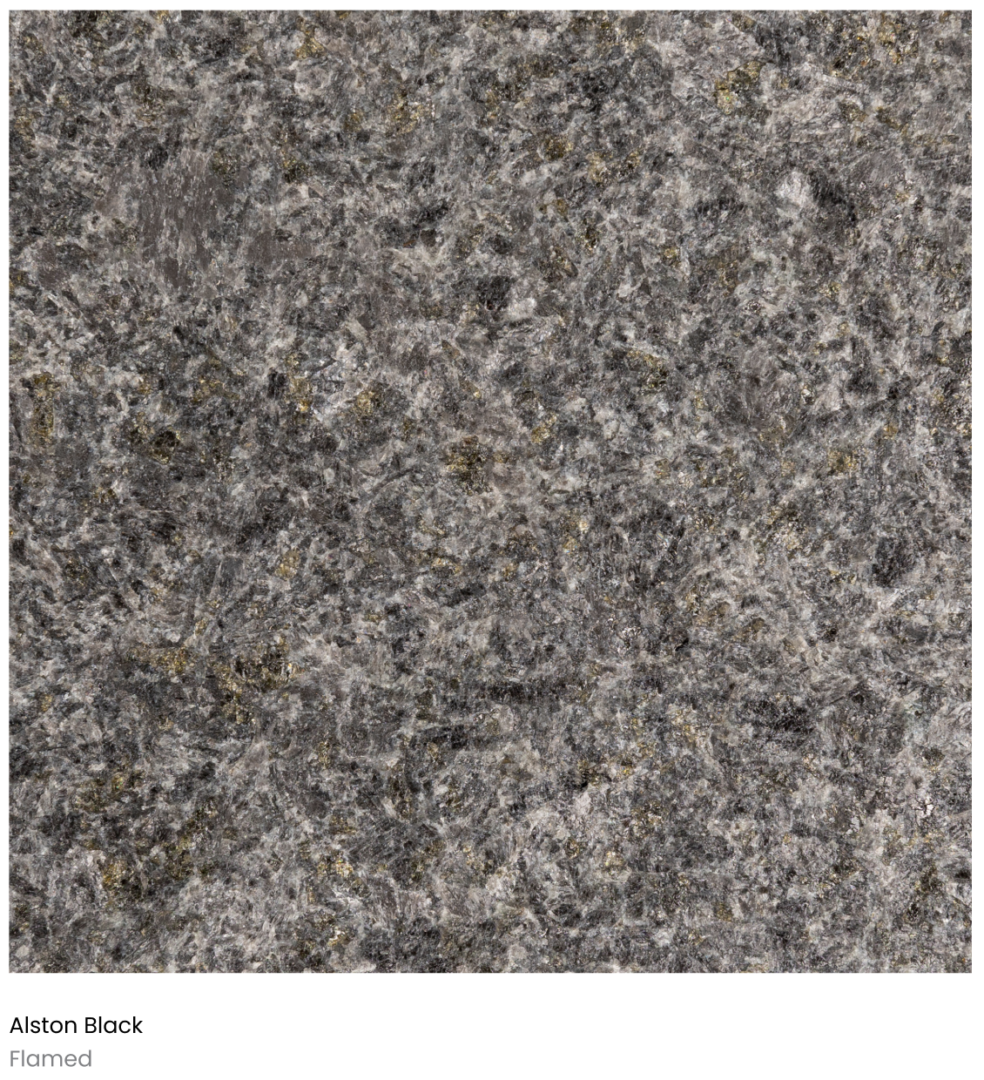
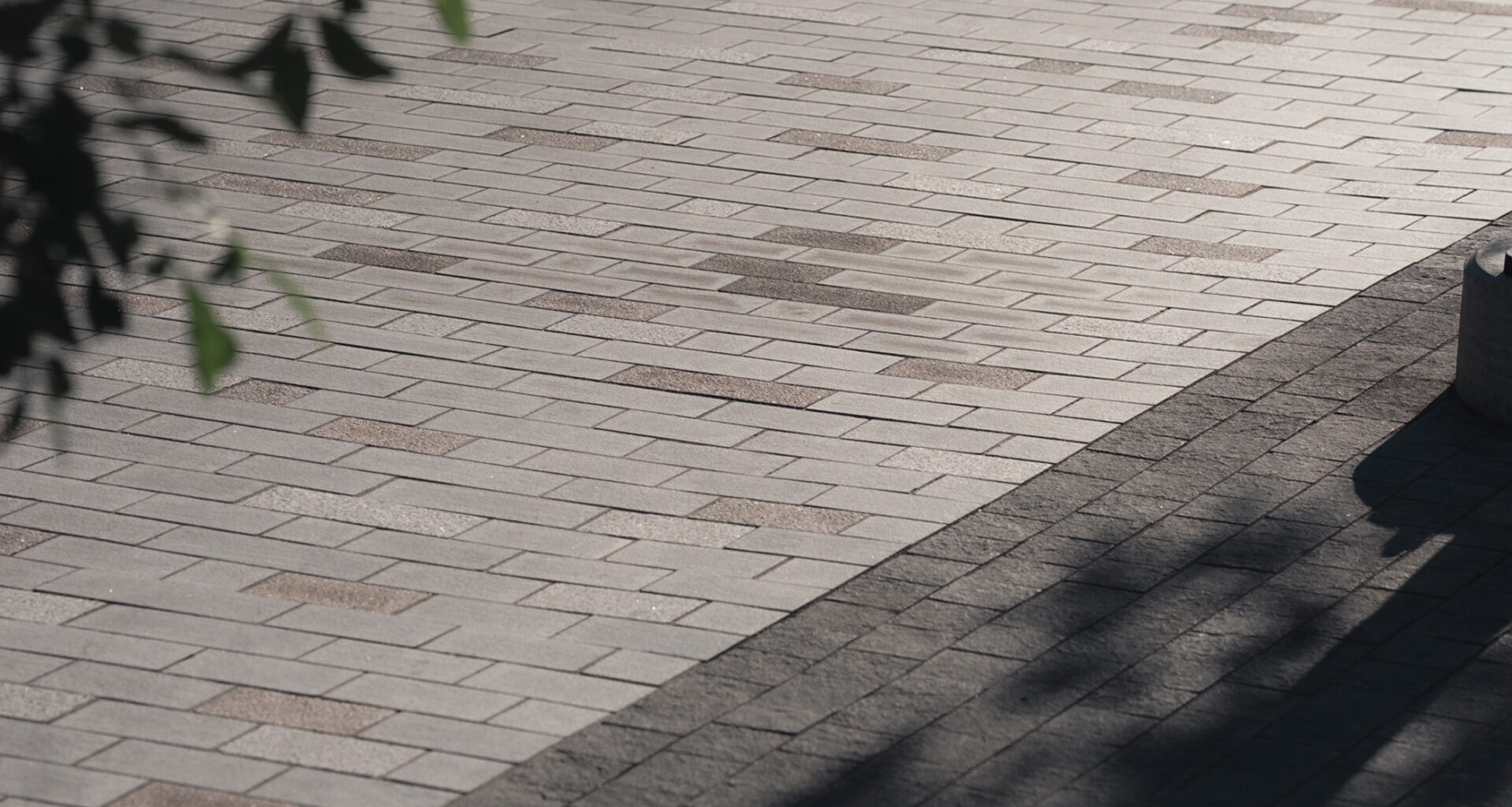
A flamed finish is achieved by directing an intense flame — frequently exceeding 2,000°F — onto the stone’s wet surface. The resulting thermal shock causes surface crystals to burst and flake away, leaving behind a rough, highly slip-resistant texture. Flaming produces particularly good results on granite and basalt owing to their mineral makeup, and it is widely regarded as the standard finish for driveways, walkways, pool surrounds, and exterior steps. The procedure tends to mute the stone’s color somewhat, exchanging a measure of vibrancy for texture and grip.
 |
 |
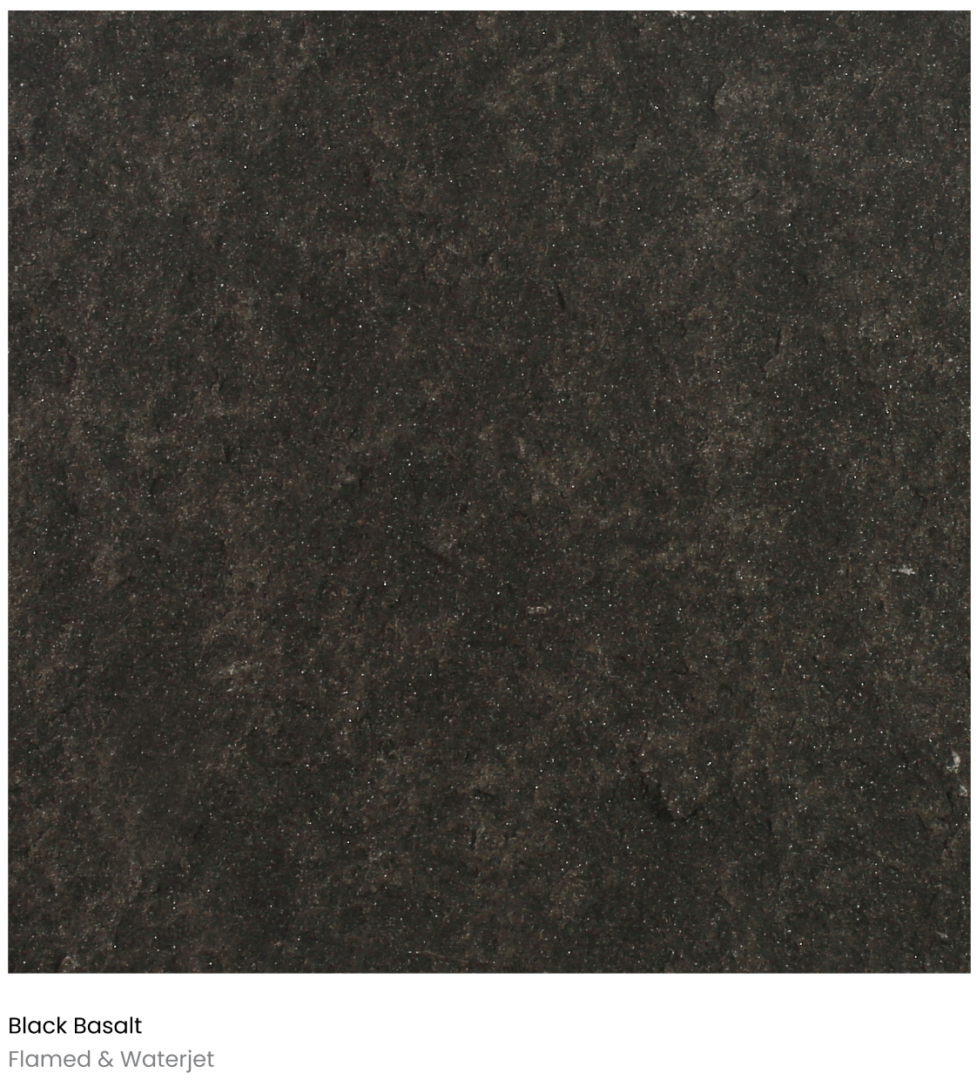
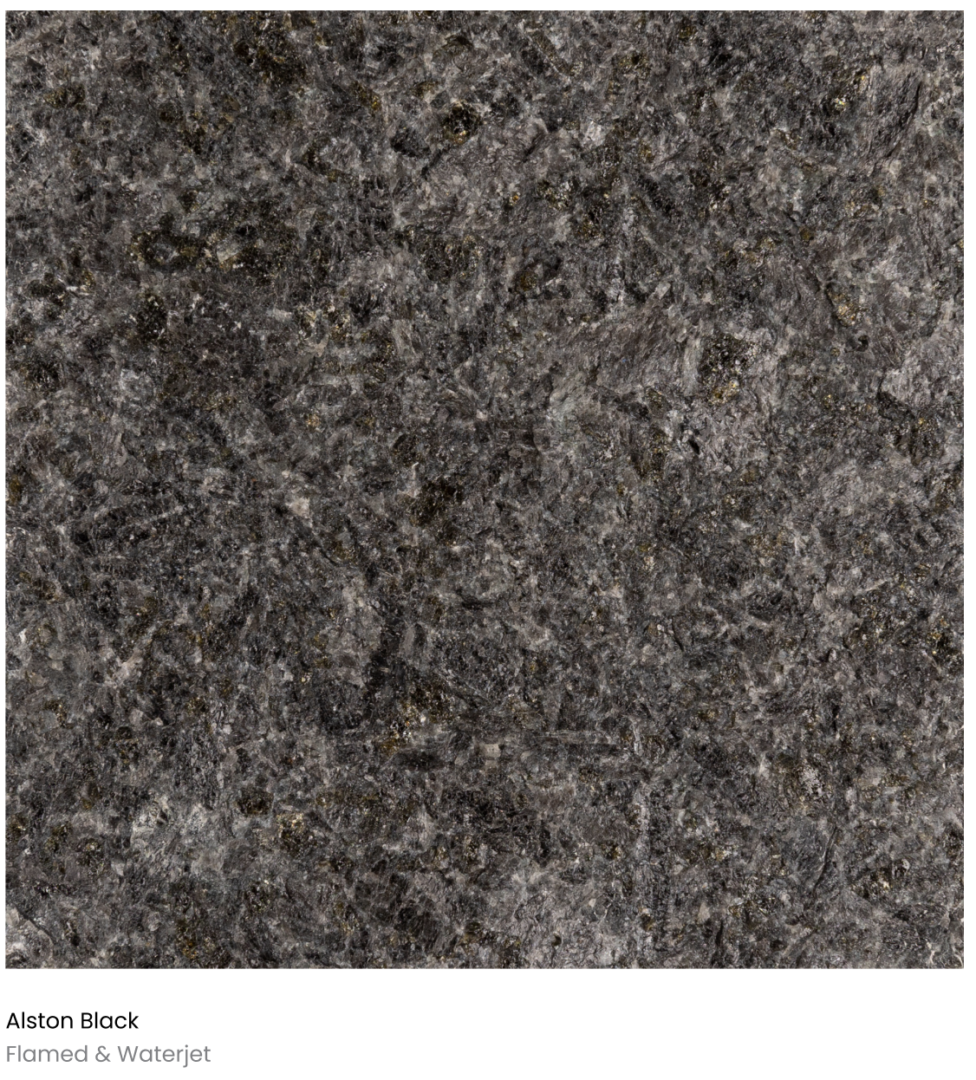
Flamed Waterjet
Occasionally, flaming alters a stone’s natural color more than is wanted. Should this occur, the surface is blasted with a high-pressure jet of water, which erodes the surface further, opens the stone’s pores, and restores a greater share of its natural color and character while preserving a texture similar in slip resistance to a standard flamed finish. This combined finish is frequently found on harder, denser stones such as basalt and granite, and it is offered by Reidstone as a distinct option alongside standard flamed and honed finishes on both materials.
 |
 |
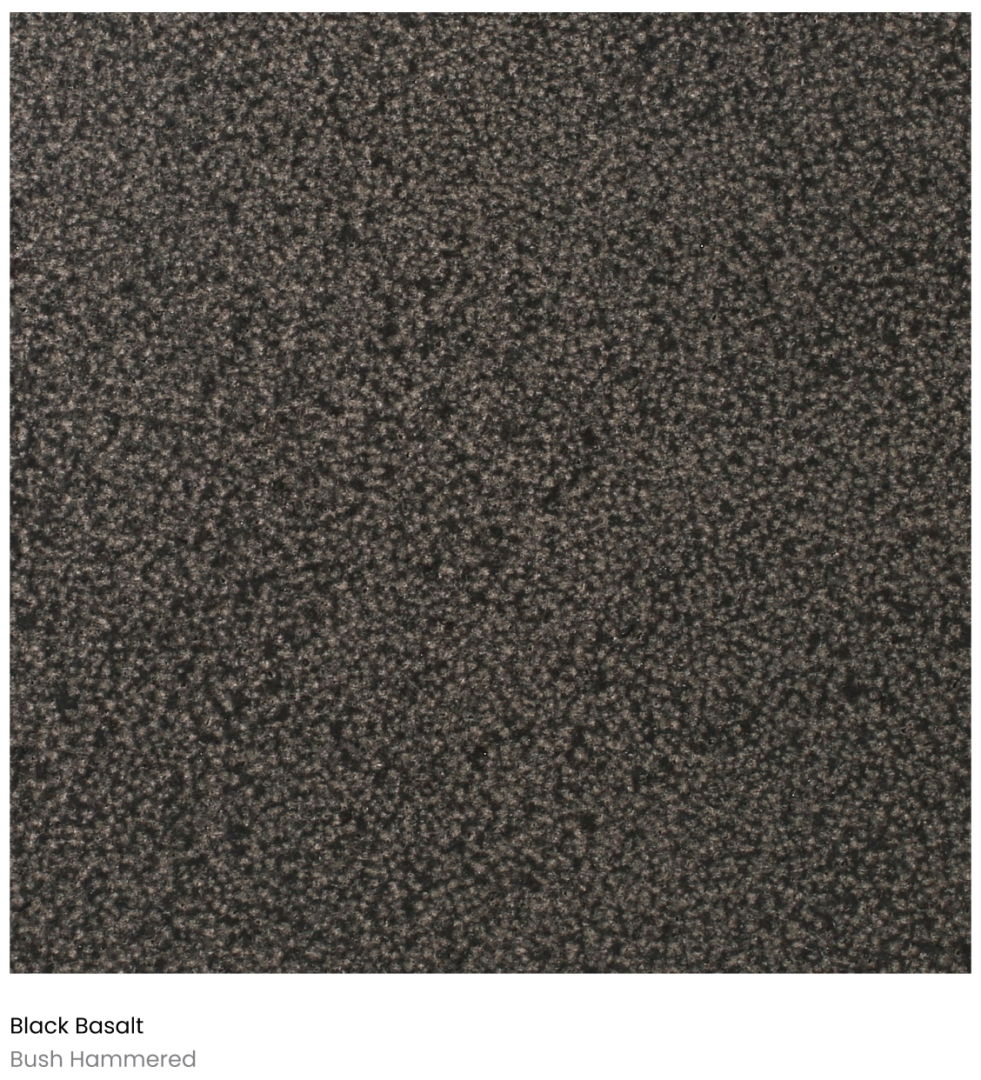
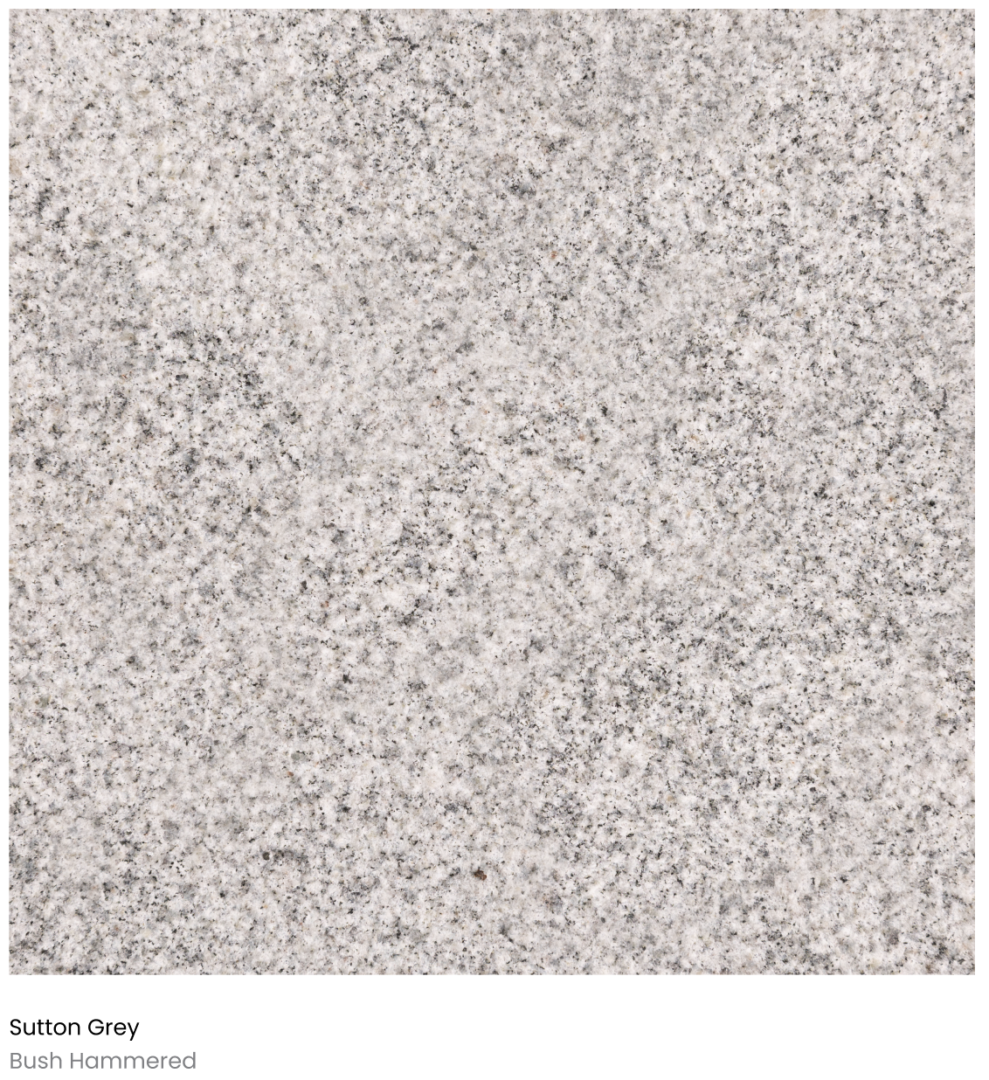
Bush-Hammered
A bush-hammered finish is produced by striking the stone’s surface with a hydraulic hammer tool fitted with a grid of pyramid-shaped points, leaving behind a dense pattern of small pits and an industrial, heavily textured appearance. It delivers excellent traction and is a frequent choice for commercial plazas, heavy-traffic paving, and steps where maximum slip resistance is valued above a refined appearance.
 |
 |
Split-Face
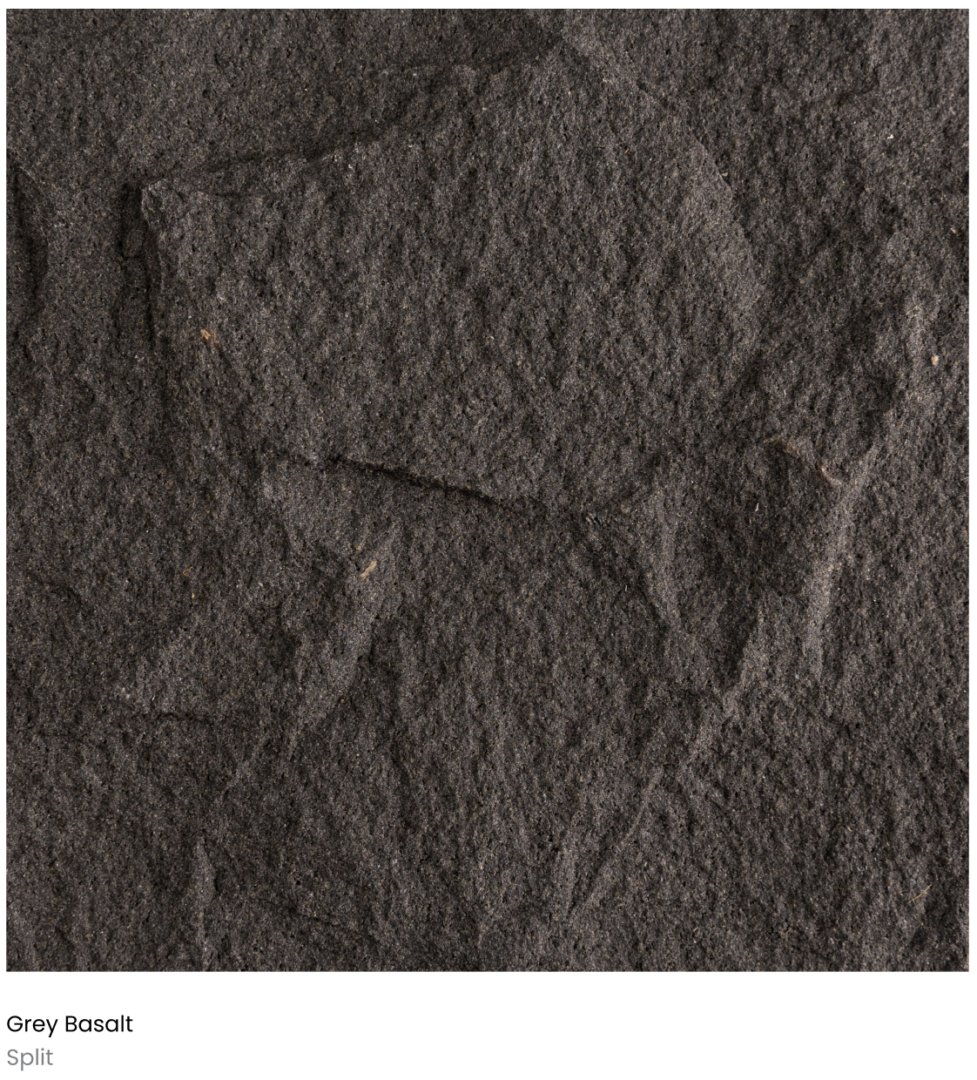
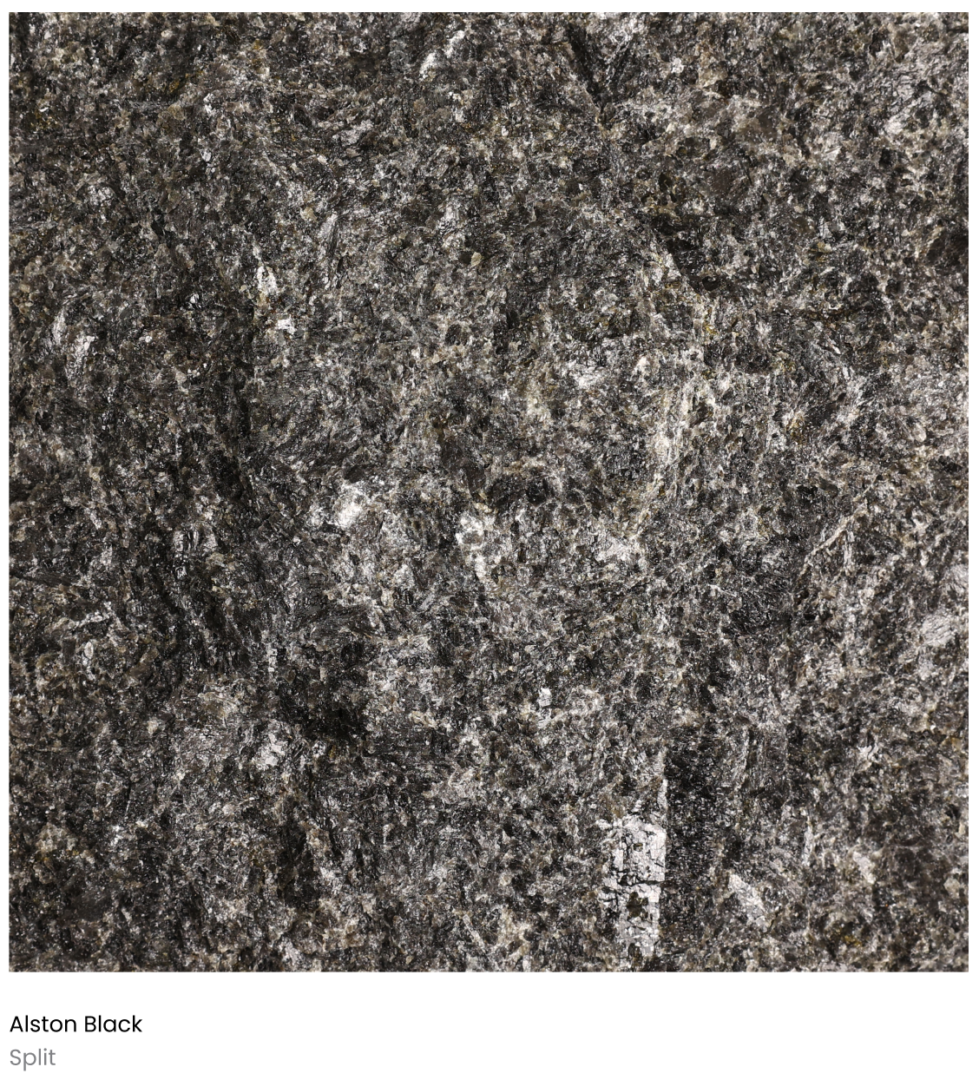
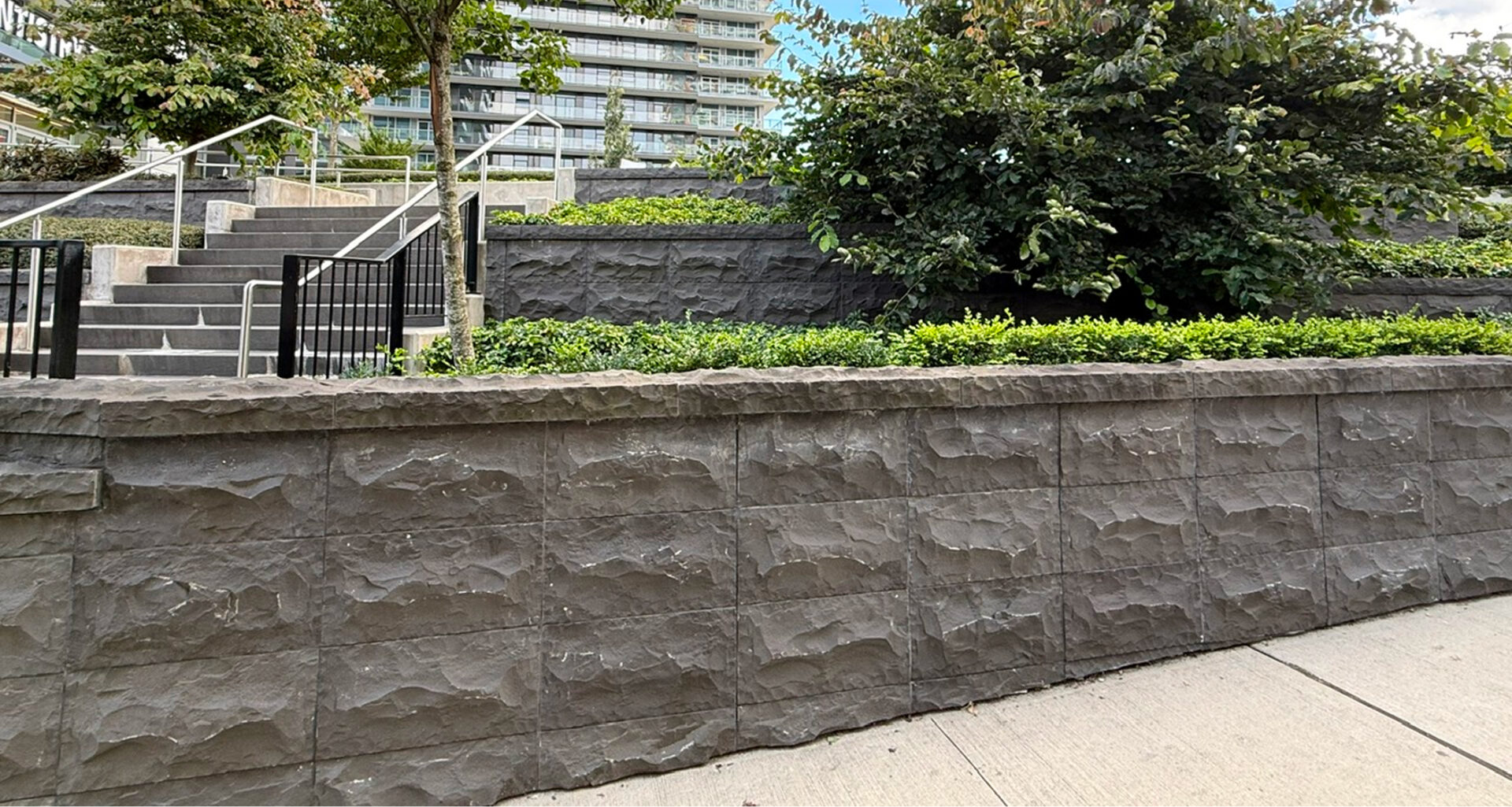
A split-face finish is created by splitting the stone along its natural seams by means of a hammer, wedge, and guillotine-style splitter, rather than by cutting or grinding it. What results is a rugged, irregular, concave-convex surface that puts the stone’s raw crystal structure on display. Split-face is widely used for cladding, veneer, and accent walls where a natural, quarry-direct appearance is the goal, and it necessitates the least processing of any common finish, which typically makes it the most cost-effective option as well.
 |
 |
Sandblasted
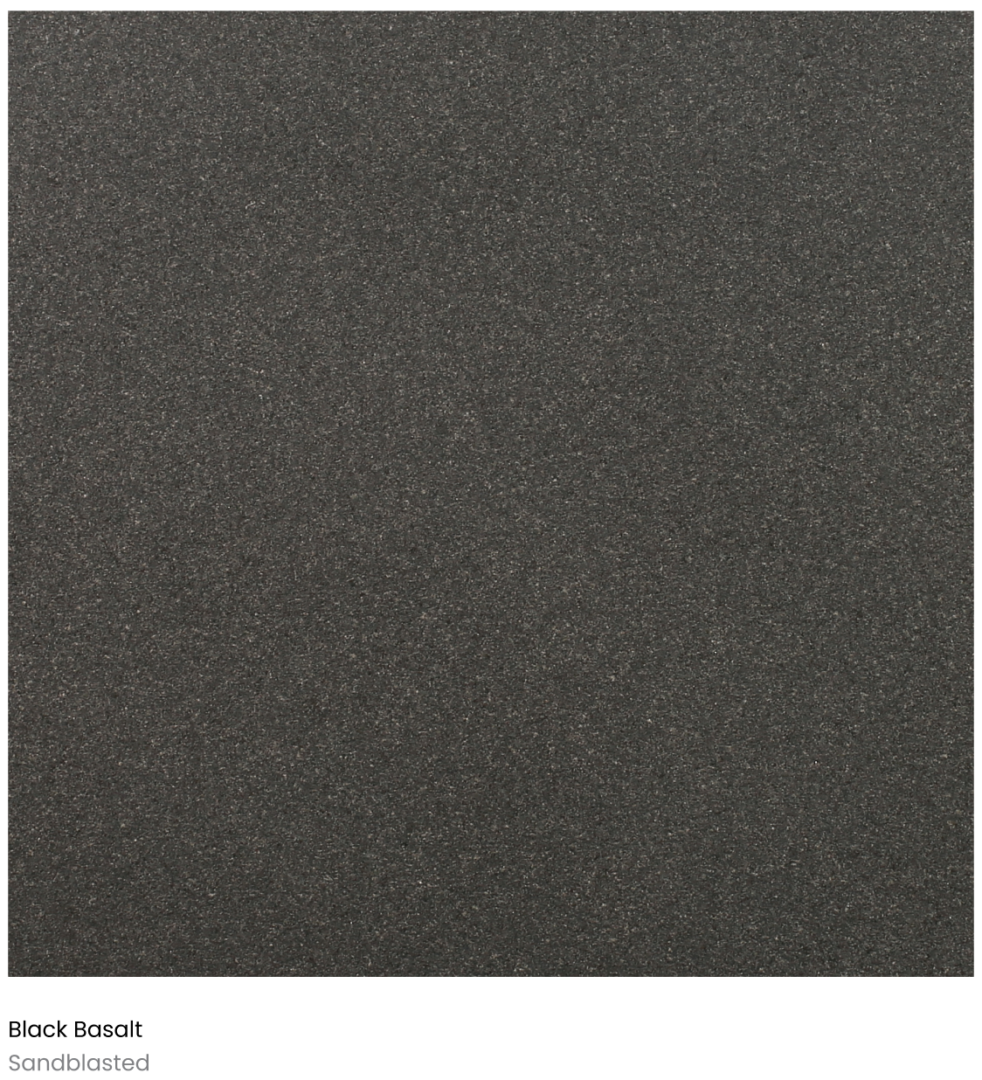
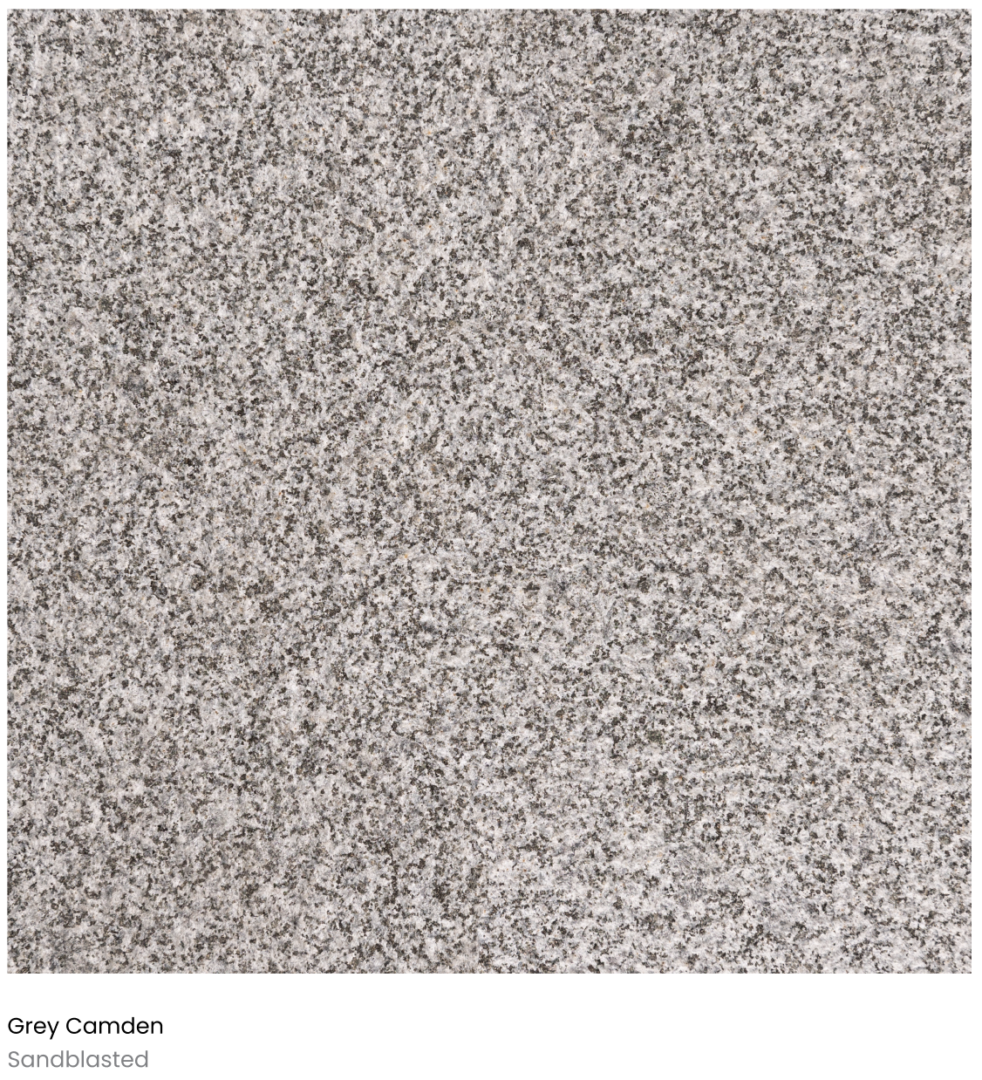
A sandblasted finish uses compressed air to force fine sand directly onto the stone’s surface, removing saw marks and leaving behind a fine-to-coarse textured surface depending on the sand grade employed. It falls somewhere between a smooth honed finish and a heavily textured bush-hammered one, and it is sometimes used to produce custom patterns or lettering, which makes it a frequent choice for memorial and monument stone.
 |
 |
Finish Comparison Chart
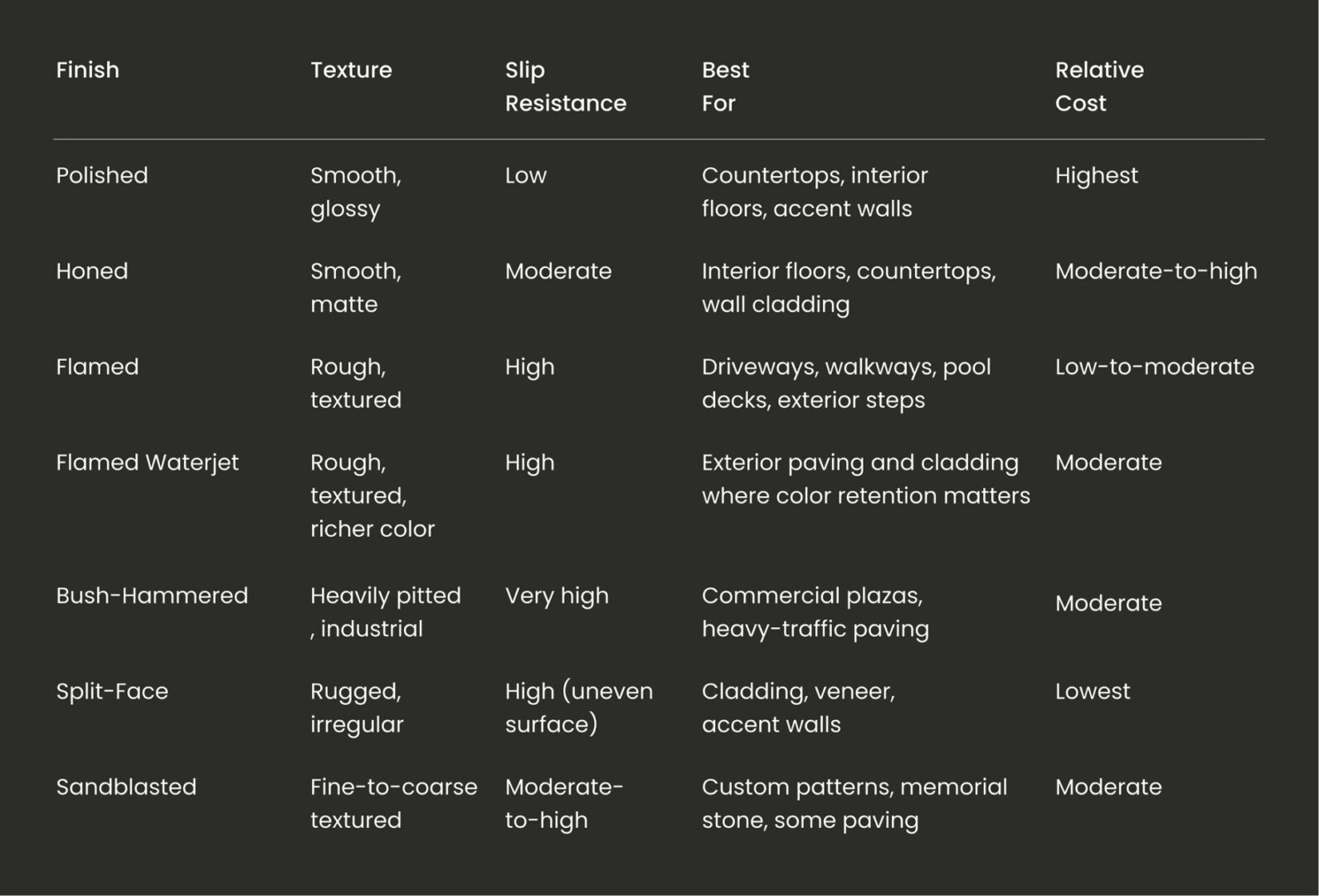
Do Basalt and Granite Share the Same Finishes?
For the most part, yes. Flaming in particular tends to produce the finest results on granite and basalt specifically, since both stones possess a mineral composition well suited to the thermal shock procedure, unlike softer carbonate stones such as limestone or marble, which can crumble or discolor unpredictably under identical treatment. Where the two materials tend to part ways is in typical application: basalt’s uniform charcoal-to-black color renders split-face and flamed finishes especially popular for modern paving and cladding, while granite’s wide color and pattern range renders honed and polished finishes more common for countertops and decorative interior surfaces, where displaying that color is the entire point.
Selecting a Finish by Application
- Driveways and walkways: Flamed or flamed waterjet, for slip resistance combined with reasonable cost.
- Pool decks: Flamed or bush-hammered. Both remain grippy when wet, which matters here more than almost anywhere else.
- Commercial plazas and streetscapes: Bush-hammered, for maximum traction under heavy foot traffic.
- Building facades and accent walls: Split-face, for a natural, dimensional appearance with minimal processing cost.
- Countertops and interior floors: Honed or polished, depending on whether a matte or glossy appearance is preferred.
- Memorial and monument stone: Polished or sandblasted, the latter especially where lettering or custom detailing is required.
For a deeper look at how finish choice affects overall project cost, see Basalt vs. Granite Pavers: 2026 Cost Comparison by Finish and Application.
Does Finish Affect Long-Term Upkeep?
Finish affects upkeep nearly as much as it affects initial appearance. Polished surfaces display water spots, fingerprints, and etching more readily, given that there is no texture to conceal minor wear, and they typically necessitate more frequent resealing to preserve their glossy sheen. Honed surfaces conceal daily wear better than polished ones but can still show staining if left unsealed, since the grinding procedure leaves the stone’s pores more exposed than a fully polished surface would. Textured finishes (flamed, bush-hammered, and split-face) prove the most forgiving over time: their rough surface naturally camouflages minor scuffs, weathering, and foot traffic, though the texture itself can trap dirt and grime, which makes periodic pressure washing worth budgeting for on heavily used exterior surfaces. Sandblasted finishes fall somewhere in between, generally requiring standard sealing on the same schedule as a honed surface.
One practical implication follows from this: a finish selected purely for appearance can end up costing more in upkeep than a slightly less dramatic one better suited to the application. A polished basalt paver beside a pool, for instance, will likely demand more frequent attention than the same stone in a flamed finish, on top of being less safe underfoot to begin with.
Bespoke and Combined Finishes
Many suppliers, Reidstone among them, are able to produce combined finishes tailored to a particular project. For example a leathered finish (a honed surface brushed with diamond-tipped bristles to create a subtle, pebbled texture that conceals fingerprints), or a flamed-and-brushed finish that softens the roughness of a standard flaming treatment for a more lived-in, antique appearance. These combined finishes typically cost more than a single standard procedure, given that they involve multiple production steps, but they can resolve a specific design problem, such as wanting the slip resistance of a flamed surface with less of the visual starkness that a single standard finish cannot.
FAQ
What is the difference between honed and polished finishes?
Both employ the same grinding procedure, but honing ends before the final buffing step. Polished surfaces are glossy and reflective; honed surfaces are smooth but matte, with better slip resistance.
Which finish is best suited to outdoor use?
Flamed, flamed waterjet, and bush-hammered finishes are the most frequent choices for exterior paving, since their texture provides slip resistance that polished and honed finishes lack.
Does flaming alter the color of the stone?
It can. The intense heat sometimes mutes or shifts a stone’s natural color slightly. When this occurs, a waterjet treatment is often applied afterward to restore a greater share of the original color and character.
What is a split-face finish used for?
Split-face is most common for cladding, veneer, and accent walls, where a rugged, natural, quarry-direct appearance is the goal rather than a smooth or polished surface.
Which finish costs the least?
Split-face typically necessitates the least processing and tends to be the most cost-effective finish, followed by flamed finishes. Honed and polished finishes require more labor and are generally priced higher.
CONTACT OUR TEAM FOR PRODUCT INFORMATION, SAMPLES OR PRICING
