

Basalt Stone: A Comprehensive Guide on Characteristics, Applications, and Selecting the Correct Finish
TL;DR: Known for its great hardness (5–7 on the Mohs scale), low water absorption, and strong freeze-thaw resistance, basalt is a dense volcanic rock with fine grains that is usually charcoal to black in color. In both residential and commercial settings, it can be found in pavers, driveways, tiling, cladding, cobblestone, and steps. Depending on the finish and thickness, installation expenses typically range from $10 to $40 per square foot. After installation, maintenance primarily consists of periodic sealing. Explore our collection of basalt finishes or get in touch with our team when you’re ready for a quote. The remainder of this guide explains properties, uses, finish options, and cost so you can determine what you truly need.
What Is Basalt Stone?
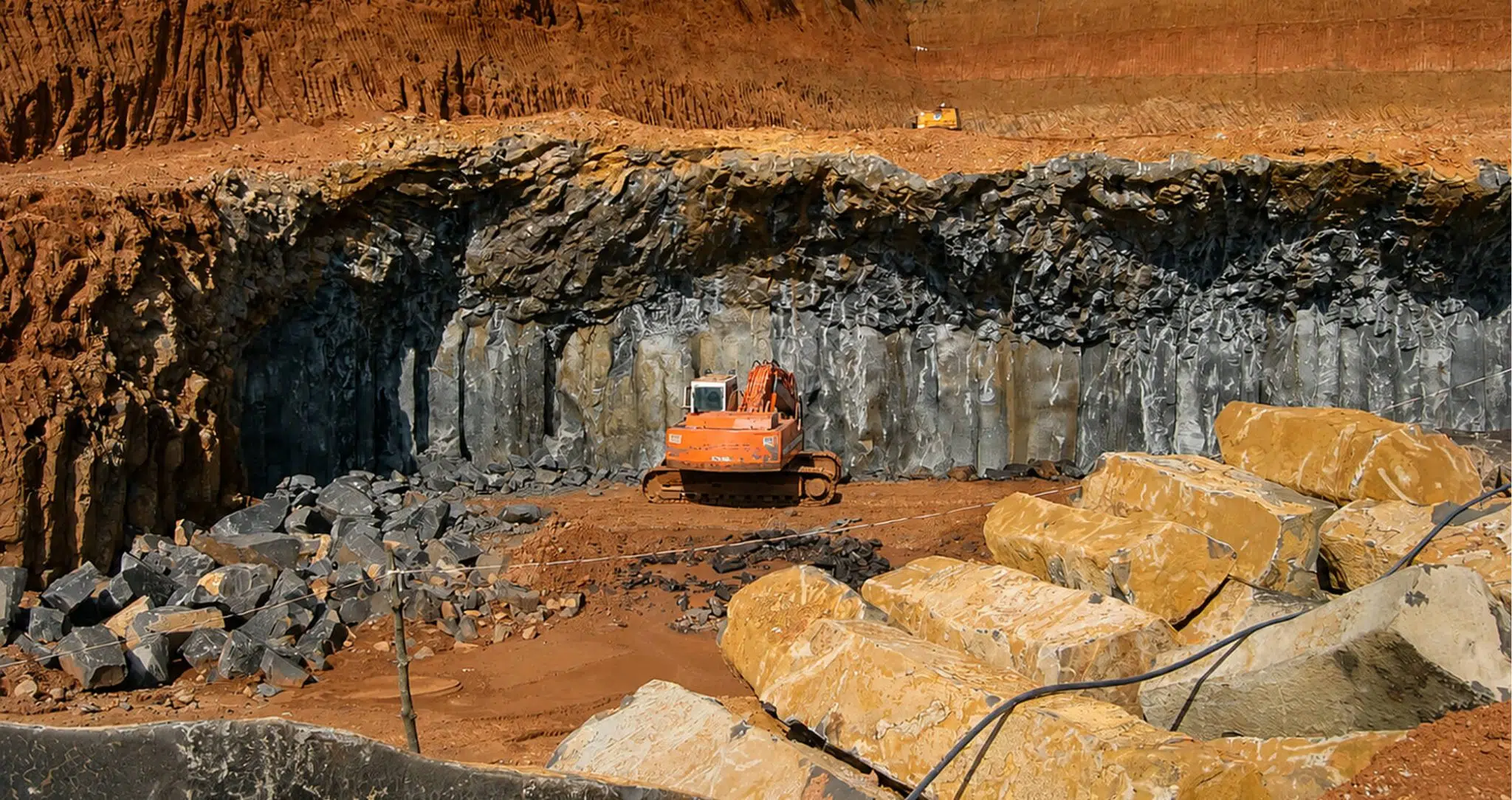
Formed when lava cools quickly at or near the earth’s surface, basalt is an igneous rock distinguished by a fine, tight, and largely uniform texture rather than the large mineral grains found in stones such as granite. Regarded as one of the most abundant rock types on the planet, basalt makes up the majority of the ocean floor and covers extensive stretches of land shaped by ancient lava flows.
For builders and homeowners, however, the practical significance outweighs the geology: what results is a hard, dense, weather-resistant stone with a clean, contemporary appearance suited to nearly any design style, from minimalist residential landscaping to large-scale commercial hardscapes
How Basalt Forms
Originating from magma that reaches the surface as lava, basalt solidifies quickly whether through a volcanic eruption, a lava flow, or an underwater vent. Because of this rapid cooling, a fine, interlocking crystal structure is locked in, in contrast to the larger crystals produced by slower-cooling rocks such as granite. This is also why basalt exhibits comparatively little visual movement or veining relative to marble or granite, as its strength is rooted in consistency rather than pattern.
Depending on mineral content and quarry origin, most commercial basalt ranges from charcoal gray to true black, with lighter gray variations occurring in some cases. Lacking large mineral flecks, basalt presents as a solid, matte, nearly monolithic color once finished, a quality many architects favor specifically because it does not compete visually with other materials within a space.
Basalt Stone Properties (Hardness, Density, and Durability)
Reflected in the following figures is the reason basalt appears so frequently in high-traffic paving and exterior applications. As is typical of any natural stone, these ranges vary according to quarry and mineral composition; provided below are the typical values used in dimension-stone testing:
| Property | Typical Range | Why It Matters |
| Mohs Hardness | 5 – 7 | Harder than limestone and marble, resists scratching and everyday wear |
| Density | ~2.8 – 3.0 g/cm3 | Among the densest common building stones, contributes to strength and weight |
| Compressive Strength (ASTM C170) |
~100 – 300 MPa | High load-bearing capacity for driveways, plazas, and structural paving |
| Water Absorption (ASTM C97) |
Often under 0.5 – 1% in dense varieties | Low absorption limits staining, freeze-thaw cracking, and efflorescence |
| Porosity | Generally under 5% in massive (non-vesicular) basalt | Fewer voids means better long-term weathering performance |
Based on ASTM-style dimension-stone testing, these figures represent typical industry ranges rather than fixed values, as the exact numbers depend on the specific quarry and stone density. For any project with strict engineering specifications, mill-certified data should be requested rather than relying on general ranges of this kind.
Freeze-thaw performance: Because dense basalt absorbs so little water, it is considerably less prone to the cracking and flaking that can affect more porous stones, such as untreated bluestone or certain limestones, under freeze-thaw conditions which can be a meaningful advantage for projects located in the northern United States and most of Canada.
Basalt vs. Granite vs. Bluestone: How to Choose
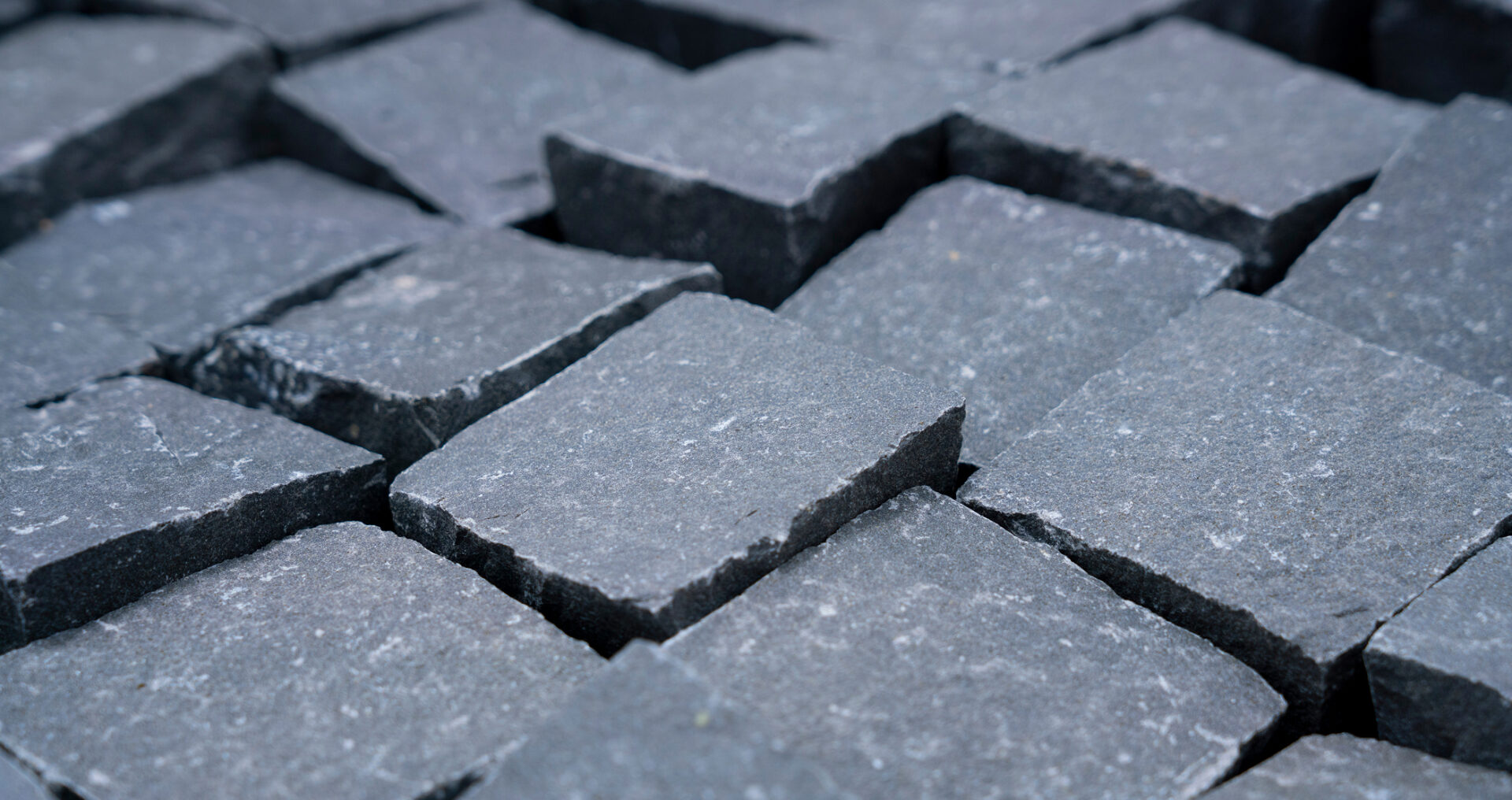
Compared constantly due to the similar problems they solve, these three stones can be distinguished as follows:
| Factor | Basalt | Granite | Bluestone |
| Texture | Fine-grained, uniform | Coarse-grained, patterned | Fine-grained, often layered |
| Typical Color | Charcoal to black | Wide range (greys, brown, blacks, reds) |
Blue-grey tones |
| Hardness | 5 – 7 Mohs | 6 – 7 Mohs | Softer, more porous (varies by source) |
| Best for | Modern paving, cladding, high-traffic areas |
Countertops, bold patterned surfaces |
Traditional walkways, patios |
| Maintenance | Low | Low | Higher – needs more frequent sealing |
Common Uses for Basalt Stone
Pavers and Driveways
Among the most common applications for basalt pavers are driveways, walkways, and pool decks, where both slip resistance and load-bearing strength are essential. Because flamed and bush-hammered finishes add texture underfoot, they are frequently chosen for pool surrounds and public plazas.
Tile, Cladding, and Veneer
Favored for interior flooring and feature walls, honed and polished basalt tile is a popular choice, while thicker basalt slabs are used for exterior cladding and building facades. Owing to its uniform dark tone, basalt provides architects with a quiet backdrop that pairs well with glass, steel, and wood. A comparison with engineered alternatives is available in Natural Stone Veneer vs. Manufactured Stone: Pros & Cons.
Cobblestone, Steps, and Landscape Accents
Given its strength, basalt is a natural fit for cobblestone streetscapes, stair treads, curbing, and garden accents. Valued for its combination of durability and a timeless, understated appearance, basalt is specifically used by many cities in streetscape projects, a use case explored further in Why Basalt Is Ideal for Urban Streetscape Projects.
Basalt Stone Finishes Explained
Depending on finish, thickness, and whether materials alone or a fully installed project are being priced, basalt pricing varies considerably. Based on current U.S. market data:
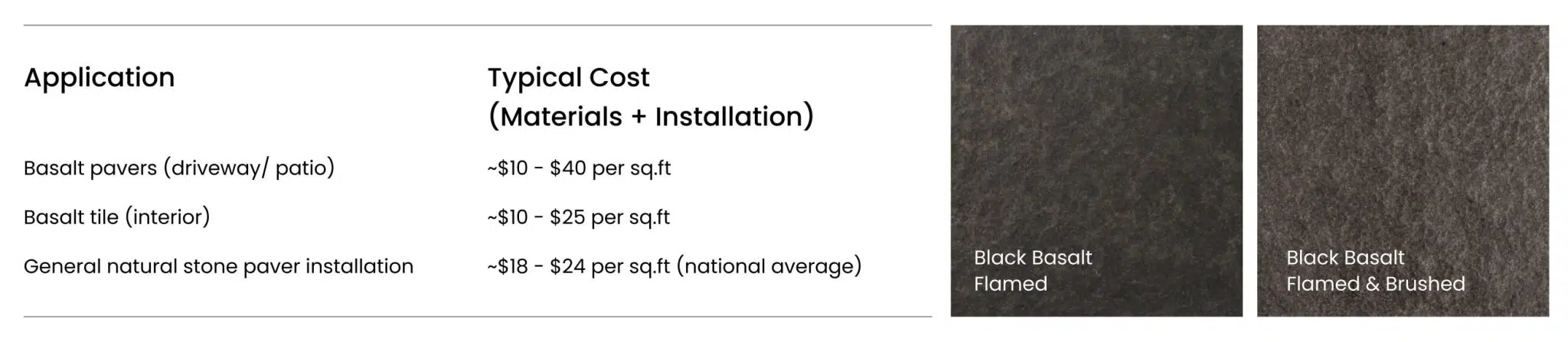
By comparison, standard concrete pavers run roughly $5 – $12 per square foot, a lower upfront cost offset by a shorter service life and reduced resistance to heavy use. Because basalt is quarried and finished to order, the most reliable way to compare real costs for a specific project is to contact our team for current pricing.
Is Basalt Stone Right for Your Project? (Pros and Cons)
|
Pros:
|
Cons:
|
Basalt Stone Maintenance and Sealing
Owing to its low porosity, basalt requires considerably less maintenance than many other natural stones. Nevertheless, a penetrating sealer is recommended for most exterior installations, both to guard against staining and to simplify cleaning, and is typically reapplied every few years depending on traffic and climate exposure. Routine care remains straightforward: debris should be swept away, surfaces rinsed with water, and a pH-neutral stone cleaner used in place of acidic products, which, although basalt does not chemically etch as marble does, can still dull the surface finish over time.
Where Basalt Stone Comes From
Quarried worldwide, basalt is sourced commercially in significant quantities from Vietnam, Indonesia, Turkey, Iceland, and parts of North America. Quarry origin affects not only color consistency and mineral composition but also, in many cases, lead time and shipping logistics for U.S. and Canadian projects. Suppliers who control quarrying and finishing directly, rather than reselling through multiple intermediaries, generally offer tighter quality control and more predictable delivery timelines for large orders.
FAQ
Is basalt stone good for driveways?
Yes. Its high compressive strength and low water absorption make it well suited to driveways, particularly with a flamed or bush-hammered finish for slip resistance.
Does basalt stone need to be sealed?
While not strictly required due to its low porosity, a penetrating sealer is recommended for exterior installations to simplify cleaning and protect against staining.
What’s the difference between basalt and bluestone?
Bluestone” is sometimes used as a regional or trade name that overlaps with fine-grained basalt, though it can also refer to a different, more porous sedimentary stone depending on the supplier; the actual material and test data should always be confirmed rather than the trade name alone.
Is basalt more durable than granite?
Both stones are highly durable. Basalt typically exhibits lower water absorption and a more uniform, fine-grained structure, whereas granite generally offers a wider range of colors and patterns. Which option is preferable depends on the application and the desired appearance.
How much does basalt paving cost per square foot?
Installed basalt paving typically runs from $10 to $40 per square foot in the United States, depending on finish, thickness, and project scope.
Conclusion & Next Steps
Earned through hardness, low absorption, and a clean, versatile appearance suited to both residential and large-scale commercial settings, basalt’s reputation is grounded in practical performance. Whether pavers are being specified for a public plaza, cladding for a building facade, or tile for an interior floor, the finish and quarry source selected will meaningfully affect both performance and cost.
Explore Reidstone’s basalt finish gallery to view available colors and textures, browse our project gallery for completed installations, or contact our team to obtain current pricing and lead times for your project.
CONTACT OUR TEAM FOR PRODUCT INFORMATION, SAMPLES OR PRICING
